Choosing the Right Size Fishing Shirt for Kids
Choose kids’ fishing shirt sizes using current measurements, sleeve control, and easy movement. Balance growth room with a fit that works today.
Quick Answer
Size a child’s fishing shirt for comfortable use now, with modest growth room that does not interfere with the hands, vision, or equipment fit. Compare current measurements with the exact youth chart instead of relying only on age. Ask the child to reach, sit, bend, and turn with any hood raised. Sleeves that cover the hands or a hem that bunches excessively indicate that the growth allowance may be too large.
As an Amazon Associate I earn from qualifying purchases. These links take you to Amazon, where purchases take place.
Three relevant shirts to compare
Examples for this guide. Check the exact garment and variation on Amazon.

In this field note
- Measure the child you are dressing now
- Do not substitute an adult chart for a youth chart
- Make the try-on a short activity
- Growth room should stay out of the way
- Check hood fit without using chest size as a proxy
- Wear the layers and equipment planned for the trip
- Fit and coverage are connected
- Decide whether to keep, exchange, or save for later
- Make repeat purchases less of a guessing game
A child's shirt needs to work on the next outing, not only after the next growth spurt. Extra room can be practical, but sleeves that swallow the hands and a hood that slips forward make a large size less useful today. The goal is a comfortable margin around a shirt that already functions well.
Children also describe fit differently from adults. A complaint that a shirt is itchy may point to a label, a seam, tight fabric, or simply an unfamiliar texture. Let the child move in the garment and explain what bothers them. Their response supplies information that a size chart cannot show.
Measure the child you are dressing now
Use the exact product's youth size chart and follow its measurement instructions. Take current measurements rather than relying on an age range from a previous purchase. Age labels group a wide variety of proportions; they do not establish a precise chest, torso, or arm length for an individual child.
Keep the tape relaxed and level, and make the process brief. If the chart asks for height, chest, or waist, record each separately. Do not round every measurement upward to create growth room and then also choose the next size up. That compounds the allowance before you have checked how the garment is meant to fit.
A well-fitting shirt the child already likes can be a helpful garment reference. Lay it flat without stretching and note exactly where you measure. Keep those dimensions separate from body-chart measurements. A flat width includes the garment's design and ease, while the child's chest measurement describes the body the shirt needs to accommodate.
Do not substitute an adult chart for a youth chart
An adult small and a youth large are not equivalent merely because they appear near each other in a household's clothing drawer. Torso length, neck opening, shoulders, and sleeve proportions may differ. Use the chart attached to the intended youth item. If a retailer groups adult and child listings together, confirm the selected audience before evaluating sizes.
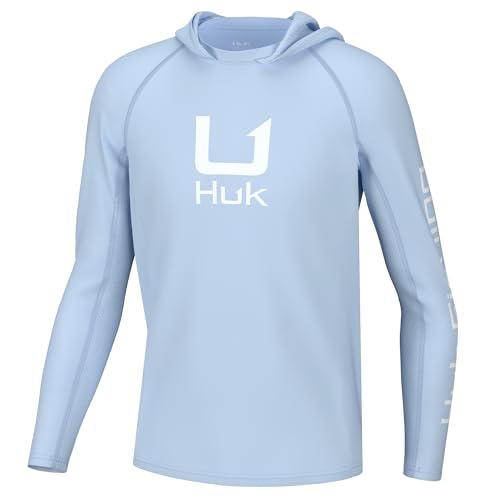
The Huk Youth Icon X Hoodie and Columbia boys' Bahama II long-sleeve shirt illustrate two different garment forms. Their size letters should be treated within their own charts. A child's successful fit in one does not automatically establish the same letter in the other.
Be equally careful with model generations. A youth Icon X listing is not automatically measured like every newer Icon. Keep the full model name with your notes. This small habit is especially useful when ordering a replacement months later, when the child may have grown and the listing may show a differently named version.
Make the try-on a short activity
A still photograph shows only one posture. Ask the child to reach forward as though handing you a light object, lift an arm, sit, and bend gently to pick something up. Avoid hooks or other fishing tackle during the fitting. Ordinary movement is enough to reveal whether the shirt pulls at the shoulders or rides up at the back.
- Start with the child's arms relaxed and check that the hands remain usable.
- Ask for a comfortable forward reach and observe cuff movement.
- Have the child sit and lean slightly forward to check the hem.
- If there is a hood, raise it and ask the child to look in both directions.
- Let the child wear the shirt briefly and explain any pressure or rubbing.
Watch whether the child repeatedly pushes sleeves up or pulls the neckline away. These actions can reveal discomfort before the child can name it. Ask a neutral question such as where the shirt feels bothersome, rather than asking whether it is fine. A favorite color should not have to compensate for a restrictive armhole or a hood that keeps slipping.
Growth room should stay out of the way
Useful growth allowance looks like comfortable ease, not a garment that needs continual management. The sleeves should allow the child to use both hands without gathering loose fabric around whatever they hold. A long hem should not create uncomfortable bunching in the normal seated position. There is no universal number of extra inches that works for every age, pattern, and activity.
Do not assume rolling every sleeve solves excessive size. A cuff adjustment or roll-up feature may be useful when the garment is designed for it, but a loosely rolled performance sleeve may fall back down. Test the adjustment through the same movements. If the child must keep fixing it, the shirt may be a future size rather than today's shirt.
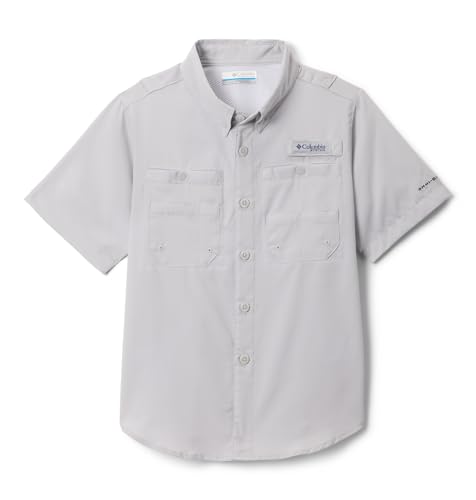
A short-sleeve design removes long-cuff length from the equation, but it does not remove the need for shoulder and torso fit. Check the upper-arm openings and the hem. The Columbia boys' Tamiami short-sleeve listing on Amazon provides a separate form to assess with its own chart, rather than a reason to accept an oversized long-sleeve shirt.
Check hood fit without using chest size as a proxy
A roomy torso does not guarantee that a hood will fit comfortably over the child's head or usual cap. Raise the hood and look at its edge from the child's normal eye level. Ask the child to turn and look toward you on each side. The hood should not require repeated pulling away from the face during ordinary movement.
Notice whether the hood draws the neckline backward or makes the child lift their chin. That can be a geometry problem rather than an overall size problem. Compare a differently shaped hood or a crew design if necessary. Do not make improvised changes to cords or garment parts as a substitute for choosing an appropriate fit.
For a closer look at the chosen youth hoodie, inspect the Huk Youth Icon X Hoodie on Amazon. Verify the youth selection, size chart, and model name together. A sun-protection phrase in a title does not answer the fit questions around the hood or hands.
Wear the layers and equipment planned for the trip
Try the shirt with the light layer the child will actually wear underneath, if any. A shirt roomy enough over a tee may feel different next to skin, and thick extra layers can change the way sleeves sit. Decide on the normal use case before adding generous space for several hypothetical combinations.
Where flotation equipment is part of the outing, follow that equipment's manufacturer instructions for sizing and fit. Assess the shirt around correctly fitted equipment, watching for uncomfortable bunching or pockets under straps. A larger shirt is not a way to fix an equipment fit issue. Keep the two decisions distinct.
Also check how the child sits in their normal fishing seat or chair. A back hem that seems excessive standing may provide useful coverage seated, but large folds at the waist can be uncomfortable. The child's feedback matters here because the fit may feel different from what the adult sees.
Fit and coverage are connected
Choose sleeve and neckline coverage deliberately, then see whether it stays where intended during movement. A long sleeve that is always pushed to the elbow does not provide the same covered area as when it is down. A hood worn around the shoulders is not covering the head simply because it is attached to the shirt.
The Skin Cancer Foundation's clothing guidance distinguishes fabric protection from actual coverage and notes that fit matters. Avoid stretching a too-small garment tightly as a strategy to retain last year's size. A rating applies to the fabric under its relevant conditions; it does not make exposed areas covered.
Keep the child comfortable enough to wear the intended design without constantly rearranging it. This is a fit objective, not a promise of complete sun protection. The separate UPF label checklist explains what to verify about a rating without turning this sizing guide into a product-protection comparison.
Decide whether to keep, exchange, or save for later
| Observation | Practical next step |
|---|---|
| Comfortable reach with manageable sleeves | Confirm the child is happy wearing it |
| Hands repeatedly disappear into sleeves | Compare a smaller or differently proportioned option |
| Chest fits but hem is short | Investigate torso length rather than width alone |
| Hood slips into view | Try another hood shape or a crew style |
| Pressure at one seam despite general room | Look for a different construction |
Keep tags and packaging intact during your assessment and follow the seller's return conditions. Do not wash a shirt to try to shrink it into place. That makes the result unpredictable and may affect your ability to return it. If you deliberately keep a future size, treat it as future clothing rather than expecting it to work well immediately.
Before each season or a trip after a long break, repeat the movement check. Growth can change sleeve and torso fit at different rates, and a shirt that was roomy may become restrictive without looking dramatically smaller on a hanger. Also inspect the garment's condition and follow its care label.
For a woven long-sleeve comparison, inspect the boys’ Bahama II option on Amazon with the child’s current measurements beside you. Verify the youth variant and exact chart before carrying over a size from a crew or hoodie.
Make repeat purchases less of a guessing game
Save the full model, size, date, and a brief fit note. Include whether the child liked the fabric and hood. These preferences can guide your next comparison without assuming that the same size will still fit. Current measurements should lead the new purchase, while the older shirt remains a reference for shape and comfort.
The kids' fishing-shirt collection helps locate youth forms once you know whether sleeves, hood shape, or torso length are the limiting factors. For measurement basics and proportion questions, return to the fit guide hub. A successful child-size decision is one that supports easy movement and usable hands today, with sensible room for growth.
Frequently asked questions
Should I buy two sizes larger so a child can grow into the shirt?
A large allowance can interfere with hands, hood position, and comfort now. Compare current measurements first and keep only growth room that remains manageable during movement.
Can a youth large replace an adult small?
Do not assume equivalence. Youth and adult patterns may distribute neck, torso, shoulder, and sleeve dimensions differently. Compare the exact charts and garment measurements.
When should I recheck a child’s fishing shirt fit?
Recheck before a new season or a trip after a substantial break, and whenever the child reports discomfort. Use a brief reach, sit, bend, and hood-turn sequence.
Final Verdict
Choose the size your child can comfortably use now, then evaluate growth allowance within that fit. Current measurements, manageable sleeves, a clear view with the hood raised, and easy seated movement are more helpful than an age label alone. Let the child describe discomfort and watch for repeated sleeve or neckline adjustments. Keep model details for future reference, but measure again before the next purchase. The best practical outcome is a shirt the child can move in readily without an adult having to keep fixing the sleeves or hem.
Explore the matching collections
Take the next step
Compare your shortlist or explore more fit & sizing.
Revisit the first shirt on Amazon ↗Related field notes
How Should a Fishing Shirt Fit? Measure and Check Movement
Find a fishing shirt fit that works through the chest, shoulders, sleeves and hem, with a clear method for reading size charts and checking movement.
Read the field note →Fishing Shirt Thumbholes: Hand Coverage, Sleeve Fit and Movement
Learn how fishing shirt thumbholes affect sleeve position and hand coverage, how to check wrist tension, and when an ordinary cuff may suit you better.
Read the field note →Columbia Tamiami II vs Bonehead: Polyester Utility or Cotton?
Compare Columbia Tamiami II long sleeve and Bonehead short sleeve by verified fabric, fit, pockets, care, and the sleeve difference that shapes the choice.
Read the field note →Columbia Fishing Shirt Sizing: Which Models Run Roomy?
Read Columbia fishing shirt fit notes by model, distinguish relaxed from regular cuts, and check standard, tall and older listings before choosing.
Read the field note →