BALEAF
Men's Long Sleeve Sun Shirt
Long sleeve · Listed UPF 50+
Details & considerationsView on Amazon ↗Do UPF shirts still protect when wet? Check wet-use evidence, fit changes, swim claims, and spare-shirt planning before your next fishing trip.
A UPF shirt may still provide protection when wet, but you should not assume its advertised dry rating remains unchanged. Wetness and stretch can affect protection, and quick-dry wording does not establish wet UPF. Look for evidence covering the exact model and intended wet use. If that evidence is missing, choose a documented alternative for sustained immersion or plan a dry change and other sun-protection measures.
As an Amazon Associate I earn from qualifying purchases. These links take you to Amazon, where purchases take place.
Examples for this guide. Check the exact garment and variation on Amazon.
Long sleeve · Listed UPF 50+
Details & considerationsView on Amazon ↗Short sleeve · Listed UPF 50+
Details & considerationsView on Amazon ↗Long sleeve · Listed UPF 50
Details & considerationsView on Amazon ↗A shirt that gets splashed once and a shirt worn through repeated swims face different use conditions. Both can be sold as fishing shirts, and both might display the same UPF number. The question is whether the number was documented under conditions relevant to your day. Without that connection, the label alone cannot answer what happens after the fabric is soaked.
Write down what wet means for the outing you are planning. Light spray during a run across the lake is different from standing waist deep while the hem stays submerged. A damp back under a pack is different from wearing the shirt into a pool after fishing. Describing the condition precisely makes it easier to ask the manufacturer a question it can actually answer.
There is no need to turn this into a complicated exposure calculation. Decide whether getting wet is incidental, frequent, or the main purpose of the garment. If it is incidental, a change of clothes may be a practical response. If it is frequent, wet-use documentation should become a selection criterion. If swimming is central, also assess the garment's intended activity and fit.
The fabric guides explain the wider rating and material questions. Here, the decision is narrower: how to evaluate a shirt when the fabric will not remain in the condition suggested by an ordinary dry product photograph.
ARPANSA's labeling guidance warns that wetness and stretch can reduce protection. That supports asking about test conditions; it does not supply a universal percentage loss for every shirt. Do not apply a value from a cotton example to a synthetic fishing top, or assume every synthetic top is unaffected.
A manufacturer's statement that a shirt is rated while wet would be more relevant than a general assertion about sun protection. Even then, match the model and read the conditions. A statement about one fabric, one edition, or a children's version is not automatic evidence for another garment carrying a similar name. Keep any uncertainty attached to the correct item.
| Wording you find | What it helps establish | What still needs checking |
|---|---|---|
| UPF 50+ in the title | A numerical listing claim | Whether wet conditions are addressed |
| Quick dry | A drying claim | UV performance while still wet |
| Rash guard or swim shirt | Marketed activity or garment category | Exact UPF evidence and intended fit |
| Wet-tested rating for a named style | Potentially relevant documentation | Matching variant, conditions, and limitations |
Even a shirt marketed as quick drying spends some time wet. If you stay in the water, it may remain wet regardless of how it behaves on a hanger. A drying claim therefore cannot answer the question during that interval. The quick-dry explanation covers how to interpret drying language without treating it as a wet UPF test.
Water-repellent wording is a separate issue as well. A product description may discuss how the surface handles droplets, but that is not the same as promising that the garment never becomes soaked. Ask directly about the condition that matters to you. Otherwise, several attractive marketing terms can accumulate without resolving the original question.
The baleaf Men's Long Sleeve Sun Shirt listing title uses both UPF 50+ and rash guard. That makes it relevant to investigate for mixed fishing and water use. It does not, by itself, disclose the wet test conditions or guarantee how a selected size behaves during swimming. Use those title words as a starting point for verification.
The baleaf Men's Short Sleeve Sun Shirt title adds quick-dry and surfing language alongside UPF 50+. The shorter sleeves change the area covered, even if two listing titles display the same numerical rating. If you prefer short sleeves for water movement, account for the uncovered arms separately rather than treating the equal label numbers as equal outfits.
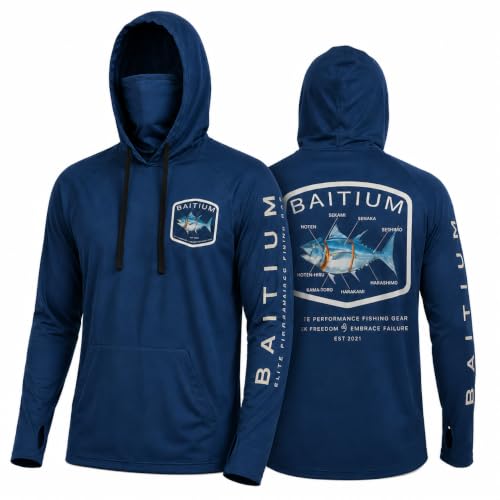
The Baitium Bluefin hoodie title states UPF50 and recycled polyester. It supplies a hooded fishing example, but those words do not establish immersion suitability. A hood can also feel and behave differently when saturated. Before assigning this type of garment to a swim portion of the day, confirm the intended use and consider the design in that setting.
Review the baleaf long-sleeve rash-guard listing on Amazon with those questions in mind. Look beyond the headline for model-specific information, and contact the manufacturer if the wet-rating basis remains unclear. Do not regard silence as confirmation simply because the title includes an aquatic activity.
Check the shirt dry first, using the size chart that belongs to that product. Then consider what the design is intended to do in water. A loose fishing cut may be comfortable for casting, while a swim-oriented cut may be designed to sit closer. There is no universal conversion from your casual shirt size to a rash guard size, and guessing smaller can introduce excess stretch.
Before a trip, use the garment only in ways allowed by its instructions and any applicable seller terms. If you already own it, observe whether wet fabric pulls the neckline down, whether the hem moves, and whether sleeves become awkward. These are usability observations, not a way to measure protection. They can tell you that a design is inconvenient even when its documentary evidence is strong.
The distinction is especially useful for a shirt worn under other equipment. A life jacket, pack, or wading setup may alter where wet fabric gathers. Put together the actual combination you plan to use. A dry fit check in isolation will not reveal every interaction, but it is better than choosing solely from a model photo with no equipment.
Keep wet and dry garments distinguishable in your packing system. A clean spare that becomes mixed with soaked clothing is no longer the option you planned. Use separate compartments or clearly separate bags, then check the dry item before changing. This is especially helpful on a trip where several people share storage space and move towels or gear throughout the day. The spare only solves the practical problem if it stays accessible and in the condition you intended.
Pack a dry spare where it will remain dry and accessible. It need not be a second copy of the same shirt, but it should provide the coverage you are relying on. Think about where you can change without leaving other equipment unsecured. Planning the change in advance is more useful than carrying a spare buried underneath wet tackle and towels.
If the first shirt becomes soaked, use the planned change or other available coverage rather than inventing confidence in an undocumented wet rating. Separate the wet shirt for transport, then clean and dry it according to its label. Our saltwater care guide addresses cleanup when spray is part of the trip.
Put documentation ahead of graphic style. Ask whether the exact garment is intended for the repeated wet use you describe and whether the stated UPF applies under relevant conditions. If the answer only repeats the dry title, the question remains open. Compare another product whose support team can identify the applicable information clearly.
Also plan transitions out of the water. A garment selected for swimming may not be your preferred dry top for the drive home or an extended stop onshore. A second shirt solves a comfort and logistics problem without pretending that two different use cases have identical requirements. Keep its care routine simple enough to maintain after every outing.
Check whether pool use is within the garment's stated scope and follow its cleaning directions afterward. Do not assume that fishing branding automatically addresses every water environment. If you want a dedicated swim garment, compare that category directly; our sun shirt versus rash guard guide focuses on those design differences.
Provide the exact style name, identifier if available, and chosen variant. Explain that the shirt will be worn saturated during the activity you have planned. Ask whether the advertised UPF was evaluated for wet use, what conditions the claim covers, and whether separate panels have different limitations. Request the matching care instructions at the same time.
Save the answer with your purchase information. If the response identifies a different product, ask for clarification rather than silently accepting the substitute. This is particularly important when a listing includes several editions. A useful answer ties the claim to your item and situation; a brand-wide slogan does not resolve the evidence gap.
For a shorter-sleeve example to investigate, see the baleaf quick-dry short-sleeve listing on Amazon. The UPF-rated collection can help locate other stated claims, but wet suitability still requires its own check. No collection filter turns a general fabric rating into proof of immersion performance.
Finally, keep the shirt within a broader plan. The Skin Cancer Foundation's sun-clothing guidance recommends complementary measures including shade, hats, sunglasses, and broad-spectrum sunscreen. Wet-use evidence is one specific clothing question; it does not eliminate exposed skin or replace the directions attached to other products.
No. Quick drying describes a moisture-related claim, while wet UPF concerns ultraviolet transmission under specified conditions. Ask for wet-use information for the exact model.
The category name alone does not document a wet UPF rating. Check the garment label, matching manufacturer information, intended activity, and relevant test conditions.
A dry spare is a practical option when spray or immersion is possible, especially if wet-use evidence is unclear. Keep it protected from water and choose coverage appropriate to the rest of your outfit.
Treat wet performance as a separate evidence question. A high UPF title, a quick-dry claim, and a rash-guard name can help identify candidates, but none should be stretched into an undocumented wet rating. Describe your intended use precisely, match the exact garment, and ask for relevant conditions. For occasional soaking, a dry spare gives you a straightforward option. For sustained water use, select clothing whose purpose and documentation address it. The right choice should also fit and move appropriately, with the rest of your sun-protection routine covering the gaps the shirt leaves.
Compare your shortlist or explore more fabric & sun coverage.
Revisit the first shirt on Amazon ↗Learn how UPF fabric limits UV transmission, why coverage and fit matter, and which fishing shirt claims need a closer look before buying one.
Read the field note →Read a fishing shirt’s UPF label with a clear checklist for model identity, rating conflicts, fabric panels, coverage, care, and seller details.
Read the field note →Understand UPF versus SPF, compare fishing shirt labels, and plan sleeve, neck, and hand coverage without treating either rating as a timer.
Read the field note →Compare sun shirts and rash guards for fishing by fit, seams, water use and coverage, and learn why the names alone do not identify the right garment.
Read the field note →