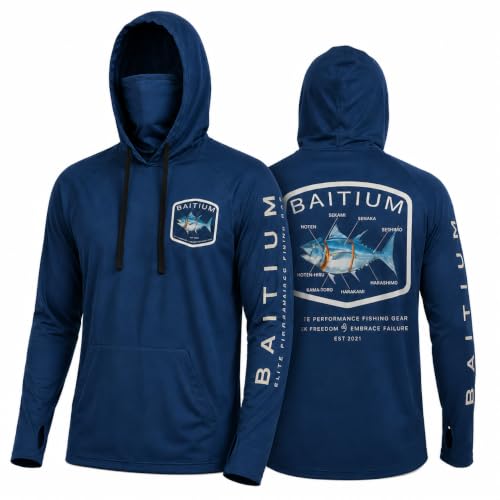
Baitium
Men's Bluefin Recycled Polyester Hoodie
Long sleeve · Listed UPF 50
Details & considerationsView on Amazon ↗Learn how UPF fabric limits UV transmission, why coverage and fit matter, and which fishing shirt claims need a closer look before buying one.
UPF clothing limits the ultraviolet radiation that passes through its fabric. The result depends on construction, fibers, dyes, and sometimes added treatments, so a sun shirt does not need one universal coating to work. A documented rating tells you more than appearance alone. Its practical value still depends on wearing the garment over the intended skin, maintaining a suitable fit, and following model-specific use and care instructions.
As an Amazon Associate I earn from qualifying purchases. These links take you to Amazon, where purchases take place.
Examples for this guide. Check the exact garment and variation on Amazon.
Long sleeve · Listed UPF 50
Details & considerationsView on Amazon ↗Long sleeve · Listed UPF 50+
Details & considerationsView on Amazon ↗A sun shirt can look almost ordinary. It may be thin enough to fold into a small bag, without the heavy feel people associate with blocking sunlight. That creates a reasonable question: what is doing the work? The answer lies in the fabric as a whole, rather than a single visible feature or a special-looking finish.
A UPF factor expresses the fraction of UV transmitted through the rated fabric under its test conditions. UPF 30 corresponds to about 1/30 transmitted, or roughly 3.3%; UPF 50 corresponds to 1/50, or 2%. That is approximately 96.7% versus 98% blocked under those conditions. The Skin Cancer Foundation explains the UPF 50 relationship. The arithmetic helps compare fabric labels, but does not measure your complete outfit or extend protection to uncovered skin.
A 50+ label is a rating category, not permission to calculate an exact personal exposure time. Nor should you add a shirt’s UPF to a sunscreen’s SPF. Check the garment’s coverage and condition as separate parts of the decision: a higher-rated short sleeve and a lower-rated full sleeve are not equivalent coverage arrangements.
Fabric provides a physical layer between the environment and covered skin. Its fibers, yarn arrangement, and other characteristics influence how much ultraviolet radiation gets through. ARPANSA identifies construction, thickness, tension, color, and additives as factors in UPF. That is why the word polyester, by itself, cannot establish a precise rating.
Think of material selection as a recipe with several ingredients. Naming one ingredient does not tell you the finished result. Two shirts can use the same broad fiber family yet differ in yarn size, fabric structure, and finishing. Conversely, two fabrics that feel different may carry the same stated UPF. The number should come from evidence about the fabric, rather than an educated-looking guess based on touch.
For a shopper, the useful distinction is between explaining a mechanism and verifying a product. You can understand why denser coverage of yarns might matter without being able to measure UV transmission at home. This guide helps with the first task. A model label and credible product documentation are still needed for the second. The wider fabric guide collection separates UPF from stretch, wicking, and drying claims.
No single treatment is required across all UPF clothing. Some products emphasize a finish; others emphasize the fabric itself. Without a specific manufacturer statement, do not describe a shirt as coated, chemical-free, infused, or permanently treated. Those words address how a product is made, and the rating alone does not disclose its complete manufacturing process.
This matters when interpreting marketing about longevity. If a seller says protection is built in, ask what care and use conditions accompany that claim. If the copy names a treatment, ask which exact garment carries it. Neither description supplies permission to bleach, overheat, stretch, or otherwise handle a shirt against its care label. Construction and care are connected without being interchangeable evidence.
A UPF value is useful only over the skin behind the relevant fabric. ARPANSA notes that its fabric test reports do not evaluate garment design or body coverage. A good design therefore needs its own assessment even when the material rating is well documented.
Spread two candidate shirts on a table and compare their shapes. Note sleeve length, cuff arrangement, neck opening, hem, and any hood. Then imagine those features in use rather than treating the flat shapes as fixed. A wide neckline may shift toward one shoulder. A short hem may lift with both arms extended. A hood may leave space beside the cheeks depending on how it sits.
Trying on the shirt answers a different question from reading the rating. Reach as though casting, bring your hands together in front of you, and look over both shoulders. If the garment pulls tight or exposes an area you wanted covered, consider another size or cut. Simply selecting the highest advertised UPF does not correct a poorly matched shape.
The Baitium Bluefin Recycled Polyester Hoodie title states UPF50 and identifies recycled polyester. Those are separate pieces of listing information. Recycled material wording does not explain the entire UV-blocking mechanism, and it does not prove a protection advantage over a shirt using another fiber source. It is reasonable to value either attribute without pretending they are the same claim.
The baleaf Men's Long Sleeve Sun Shirt title states UPF 50+. Its crew shape makes it a useful example when you want arm and torso coverage while choosing head and neck accessories separately. The KOOFIN GEAR Performance Hooded Fishing Shirt has a hood and sun-protection wording in the listing title, but no numerical UPF is established there. A visible hood cannot fill that evidence gap.
Look at the Baitium hoodie listing on Amazon if you want to connect a stated factor with a hooded outline. Use the images to inspect design, and the matching tag or model details to assess claims. Keep the two tasks separate: photographs are good at showing where material is placed, but they cannot measure how much UV passes through it.
A useful question for a seller is whether the rating applies to the whole fabric arrangement shown in the photographs. This is more precise than asking whether the shirt works. If the answer describes only the main torso material, ask about the areas you noticed separately. If the design is uniform and the documentation clearly covers it, you have one less unresolved question. Let the amount of investigation follow the garment's actual complexity rather than treating every plain crew as a complicated technical system.
Holding a shirt up to visible light can reveal holes, extremely open areas, or damage. It cannot assign a UPF number. The light you can see is not a complete readout of the ultraviolet radiation relevant to the claim. A dark-looking sample should not be promoted to UPF 50 through a home inspection, and a lightweight rated fabric should not be dismissed solely because it feels airy.
Use that simple inspection for questions it can answer. Is the elbow fabric visibly worn compared with the torso? Is a seam opening? Has a snag created a hole? Are there separate mesh areas whose rating needs clarification? These observations tell you when to investigate or replace a garment; they do not produce a laboratory result.
Product photographs have a similar limitation. Lighting, background, and image processing can alter how dense or opaque a fabric appears. Two retailer images are not a controlled comparison. If you need information about panels or a wet-use claim, request written details for the exact style rather than trying to extract a number from a thumbnail.
A fabric is not always worn in its relaxed state. Stretch at the upper back when reaching forward, tension across the chest, and a tight hood can all make the in-use shape different from a garment lying flat. ARPANSA explains that stretching a knit can open spaces and lower its UPF. This is a reason to assess fit without assigning an invented penalty to every movement.
Do not respond by choosing an excessively oversized shirt that creates new practical problems. Aim for a cut that permits your normal fishing motion without sustained fabric strain. If chest room improves but the cuffs become awkward, another cut may work better than continuing to size up. The fishing shirt sizing guide handles that garment decision in more depth.
Quick drying and wet UPF are different claims. One concerns moisture leaving fabric; the other concerns UV transmission under stated conditions. A shirt can advertise the first without documenting the second. If wading, spray, or a swim makes wet use central to your day, seek that information directly. The wet UPF guide gives a focused checklist for this situation.
Consider the transition as well as the main activity. You might choose a top for a dry morning boat ride but keep it on after it becomes soaked. That change in condition deserves planning before the trip. Carrying an appropriate spare can be easier than trying to interpret incomplete test language when you are already away from shore.
Read the garment's washing and drying instructions when it is new, and save a photograph if the tag may become difficult to read. Following those instructions provides a consistent care routine. It does not let you prove the shirt retains an exact factor after a certain number of outings. Avoid both extremes: declaring that one wash destroys UPF and declaring that no amount of wear can change it.
Make inspection part of putting the garment away. Check the places that encounter straps, cuffs, hooks, and seat edges. If fabric is torn or badly abraded, focus on restoring sound clothing rather than finding a slogan that reassures you about the original number. Repairs can restore usefulness, but an ordinary patch does not automatically carry the old material's documented rating.
Before buying, try describing the option in one practical sentence: this is a long-sleeve crew with a stated UPF claim, or this is a hooded shirt whose numerical rating still needs confirmation. If that sentence requires guessing about another edition, a hidden treatment, or an unlisted test, you have found the next research question.
The baleaf long-sleeve Amazon listing is one example with a factor in the listing title. Browse the UPF-rated shirts for other documented listing claims, then compare the silhouettes you would actually wear. There is no requirement to buy a more complicated design if a simpler one integrates well with your outfit.
Once you have matched evidence and shape, use the garment in a broader sun-protection routine. The Skin Cancer Foundation recommends combining clothing with shade, hats, sunglasses, and broad-spectrum sunscreen. Understanding the fabric helps you choose it thoughtfully; coverage and those complementary measures make that choice practical.
No. Construction, fibers, dyes, and sometimes treatments can contribute. A numerical rating alone does not identify a manufacturing method, so use exact manufacturer information before calling a shirt coated or untreated.
A flashlight may expose holes or very open fabric, but it cannot establish UV transmission or a UPF rating. Use it for condition checks and use matching product documentation for the rating.
A hood changes where fabric can cover you. It does not raise the material’s UPF by itself. Evaluate the hood’s fit and the fabric claim as two separate features.
UPF clothing works through the properties of its fabric, with construction, fibers, color, and any treatments contributing to the result. The useful shopping shortcut is a documented rating for the exact garment, followed by a careful coverage and movement check. Do not infer UPF from softness, opacity, recycled content, or a hood. Ask specific questions when wet use or separate mesh panels matter, and follow the care label once the shirt is yours. A straightforward design with understandable evidence is easier to choose and use than an impressive collection of claims that do not identify the actual item.
Compare your shortlist or explore more fabric & sun coverage.
Revisit the first shirt on Amazon ↗Do UPF shirts still protect when wet? Check wet-use evidence, fit changes, swim claims, and spare-shirt planning before your next fishing trip.
Read the field note →Read a fishing shirt’s UPF label with a clear checklist for model identity, rating conflicts, fabric panels, coverage, care, and seller details.
Read the field note →Understand UPF versus SPF, compare fishing shirt labels, and plan sleeve, neck, and hand coverage without treating either rating as a timer.
Read the field note →Wash fishing shirts and UPF clothing with a label-first routine for stains, fasteners, detergent, rinsing, and drying across different fabrics.
Read the field note →
