BALEAF
Men's Long Sleeve Sun Shirt
Long sleeve · Listed UPF 50+
Details & considerationsView on Amazon ↗Understand UPF versus SPF, compare fishing shirt labels, and plan sleeve, neck, and hand coverage without treating either rating as a timer.
UPF describes ultraviolet transmission through fabric; SPF is the sunscreen rating associated with protection against sunburn. A fishing shirt should carry a UPF claim, even if its listing casually calls it an SPF shirt. The numbers are not interchangeable, and neither tells you how long to remain outside. Choose a documented garment rating, check the skin it actually covers, and follow sunscreen directions for exposed areas.
As an Amazon Associate I earn from qualifying purchases. These links take you to Amazon, where purchases take place.
Examples for this guide. Check the exact garment and variation on Amazon.
Long sleeve · Listed UPF 50+
Details & considerationsView on Amazon ↗Long sleeve · Listed UPF 30
Details & considerationsView on Amazon ↗Long sleeve · Listed UPF 50
Details & considerationsView on Amazon ↗The confusion often starts in a shopping search. One listing says UPF 50+, another says sun protection, and a third puts SPF in its title. All three may show a similar long-sleeve shirt. Before comparing them, separate the garment's fabric rating from the language used to attract shoppers. A familiar number on its own is not enough information to make those listings equivalent.
For anglers, the useful question is how a label changes an outfit decision. You need to know what evidence belongs to the shirt, what belongs to sunscreen, and which gaps neither a product title nor a high number can solve. This guide explains that division; the fishing shirt fabric guides cover construction and other material questions.
Consider keeping clothing and sunscreen notes in separate parts of your trip list. Under clothing, write the shirt model and any coverage gap you still need to address. Under sunscreen, keep the product and its directions. This simple separation prevents a common practical mistake: remembering that something in the bag says 50 while forgetting which product it is or how it should be used. It also makes a shared packing list clearer when another person helps gather the gear.
UPF stands for ultraviolet protection factor. SPF stands for sun protection factor. The Skin Cancer Foundation explains that UPF concerns UVA and UVB transmission through fabric, while SPF measures protection against UVB-related skin reddening. This distinction is the starting point, not a reason to substitute one product for the other.
| Question | UPF on clothing | SPF on sunscreen |
|---|---|---|
| What are you evaluating? | A fabric or garment claim | A sunscreen product claim |
| Where do you look? | Garment tag and matching model details | Bottle label and directions |
| What needs separate attention? | Fit, coverage, condition, and intended use | Application and reapplication instructions |
| What does the number not provide? | A whole-outfit rating | A fishing-trip duration |
A fabric label cannot describe skin outside that fabric. A sunscreen number cannot describe whether you applied the product as directed. Treating the labels as independent pieces of information makes shopping simpler: assess the shirt as clothing and read sunscreen as a separate product. Do not try to turn their numbers into a combined score for the day.
Imagine a short-sleeve shirt marked UPF 50 and a long-sleeve shirt marked UPF 50. Their equal numbers do not settle which leaves your forearms covered. Now imagine a bottle marked SPF 50 next to either shirt. The repeated number still does not tell you whether a collar leaves the back of your neck exposed. The arithmetic is less useful than looking at the actual outfit.
Similarly, a plus sign should be preserved when you compare labels, but it should not distract you from missing information. If the exact shirt has no supported rating, assigning it 50 because another item in the same brand's range has that number creates an answer the evidence does not supply. Keep unknown ratings unknown until the model information resolves them.
Search language is often loose. An apparel title may use SPF as shorthand for sun protection, but shoppers should look for a stated UPF rating in the garment details. If both appear, establish which wording is on the actual label. If the listing gives only a general UV claim, that is a reason to request clarification, rather than translate the claim into a specific factor.
A useful comparison starts with a product that states the relevant term clearly. The baleaf Men's Long Sleeve Sun Shirt listing title states UPF 50+. That is a documented listing claim for this example; it is not a measurement made by this website. Confirm your chosen variant's label when it arrives, because the buying decision ultimately concerns the item you receive.
The Huk Pursuit Vented Long Sleeve is a valuable counterexample to casual brand assumptions: its listing title states +30 UPF. A current manufacturer page for a differently identified Pursuit product does not upgrade this listing. Model names can recur across editions, so the article title, color, style identifier, and garment tag should point to the same item before a specification is carried across.
Build the outfit in front of a mirror, then check it in a fishing posture. Stand with your arms relaxed first. Next, extend both hands as if holding a rod, turn your shoulders, and lean forward as you would when handling tackle. This sequence exposes problems that a front-facing product photograph cannot answer: a cuff that retreats, a hem that lifts, or a collar that opens when you bend.
Make a short coverage note rather than a rating calculation. Record sleeves, shoulders, torso, back of neck, ears, and hands as covered or uncovered in your chosen setup. A hood worn down belongs in the uncovered column for the neck it would otherwise cover. A sleeve rolled up has the same practical consequence, regardless of the factor printed on its tag.
For an explicitly labeled crew-neck starting point, inspect the baleaf UPF 50+ long-sleeve listing on Amazon. Compare its neckline and sleeve arrangement with what you actually plan to wear. The point is to connect a documented number to a usable shape, rather than buy the largest number visible in a search result.
Clothing is one component of sun protection. The Foundation's clothing guidance also recommends shade, a hat, sunglasses, and broad-spectrum sunscreen. Follow sunscreen labeling for application and reapplication; a shirt purchase does not change those instructions for the areas where you use it.
On a boat, think through the positions you expect to hold: seated at the helm, standing at a rail, reaching toward a cooler. Your sleeve and neckline choices should still make sense in those positions. A hood that seems convenient indoors may need a separate fit check with the cap and eyewear you bring. This is a movement question that the UPF number cannot settle.
For a bank session, try the shirt with any pack or shoulder bag. A strap can change how the neckline sits and how the torso fabric pulls. Check coverage again after taking the bag off. You do not need a special rating for each posture; you need a garment whose coverage remains workable across them, with a plan for exposed skin.
Neither UPF nor SPF tells you how comfortable a shirt will feel, whether a vent sits under a pack, or whether the cuffs interfere with a reel. Those are separate selection questions. Compare an actual garment's cut and features, then use the documented UPF claim as another criterion. A number should support the decision, rather than crowd out all of the other information.
Condition and use deserve their own questions too. ARPANSA cautions that wetness, stretching, wear, and chemical exposure can reduce protection. Ask whether a rating addresses the use you intend. Our wet-shirt guide handles that evidence check in detail, without assuming all fishing tops have the same wet performance.
A rating also does not create an expiration date. Avoid replacing sound clothing on an invented annual schedule, and avoid trusting damaged clothing indefinitely because its tag once carried a high number. When the condition or documentation is uncertain, the next useful action is to inspect the garment and ask the manufacturer a precise question about that model.
There is also a subtler trap: assuming a rating makes every design equally convenient. If a crew leaves you constantly adjusting a separate neck covering, a hooded design may simplify your outfit. If a hood bothers you and stays down all day, it may add little practical value. Decide using your actual wearing habits, with no imaginary coverage credited to unused features.
Before ordering, save the relevant listing details alongside the product name. You only need enough to identify the variant and compare its delivered label with the claim you relied on. This is especially helpful with pages that combine several colors and designs under one listing. If the visible information changes after selecting a variant, reconsider the comparison using the selected item.
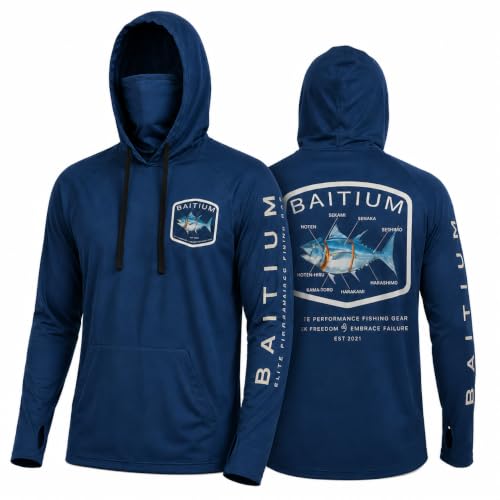
The Baitium Bluefin hoodie on Amazon provides a hooded example whose listing title states UPF50. Compare it with the crew options for neckline use and fit, not as an automatic upgrade in every respect. Our UPF-rated collection groups documented listing claims for further browsing, while the UPF label checklist walks through conflicting details.
When the shirt arrives, keep the packaging until you have checked the label, seams, and fit under the seller's applicable terms. Read the care tag before the first wash. Then put the outfit together once more with the hat and accessories you intend to use. That final check connects the evidence you bought with the coverage you will actually wear.
Shoppers sometimes call sun-protective clothing SPF clothing, but UPF is the relevant fabric rating. Look for a specific UPF claim on the matching garment label rather than assigning a factor from casual listing language.
A shirt only covers part of the body. Use a complete sun-protection approach and follow sunscreen labeling for exposed areas; the garment rating does not cover bare hands, face, or gaps.
No useful combined outfit factor follows from adding them. Evaluate the shirt rating and coverage separately from the sunscreen label and its application instructions.
Use UPF to compare a fishing shirt’s documented fabric claim, then inspect how the garment covers you in motion. Use SPF when reading sunscreen, with its directions attached. A clear UPF 50+ title can make a listing easier to assess, but it cannot resolve an exposed neck or a sleeve you keep rolling up. Preserve the exact model’s stated number, including older listings with lower claims, and ask about inconsistencies before ordering. The best outcome is an outfit with understandable labels and workable coverage, supported by the other sun-protection measures you use.
Compare your shortlist or explore more fabric & sun coverage.
Revisit the first shirt on Amazon ↗Learn how UPF fabric limits UV transmission, why coverage and fit matter, and which fishing shirt claims need a closer look before buying one.
Read the field note →Do UPF shirts still protect when wet? Check wet-use evidence, fit changes, swim claims, and spare-shirt planning before your next fishing trip.
Read the field note →Read a fishing shirt’s UPF label with a clear checklist for model identity, rating conflicts, fabric panels, coverage, care, and seller details.
Read the field note →Decide whether a fishing shirt improves on your ordinary tee by weighing coverage, comfort, useful features, repeat wear and the cost of unused extras.
Read the field note →