How to Check the Fit of Women’s Fishing Shirts
Check women’s fishing shirt fit through the bust, hips, sleeves, and seated reach. Use body charts and movement tests to compare cuts confidently.
Quick Answer
A women’s fishing shirt should accommodate the bust and hips without restricting the shoulders or pulling the hem upward during a cast. Begin with the exact model’s body chart, then assess movement in the layers you intend to wear. Button gaps, a hem caught at the hips, and a hood that tugs at the neckline reveal different fit problems. Choose the cut that resolves the problem rather than relying only on your usual size.
As an Amazon Associate I earn from qualifying purchases. These links take you to Amazon, where purchases take place.
Three relevant shirts to compare
Examples for this guide. Check the exact garment and variation on Amazon.


In this field note
- Make the bust, waist, and hips separate entries
- Use the front opening as a fit signal
- Check hip ease before blaming the hem
- A practical try-on sequence
- Allow for the layers you actually use
- Hood and neckline fit deserve their own decision
- When the next size is not the next answer
- Record the fit you want to repeat
A shirt can look smooth in a standing photograph and still be uncomfortable when you reach toward a rod holder. Women's fishing-shirt fit depends on how the garment handles changing positions, especially across the bust, upper back, hips, and sleeves. A neat outline is only useful if the shirt also moves with you and keeps the coverage you want.
Start with your own preferred silhouette. Some anglers want a close but unrestricted knit; others prefer a straighter, roomier shape. Neither preference is a sizing error. The useful distinction is between a shirt that intentionally skims the body and one that is held taut by an area it cannot accommodate.
Make the bust, waist, and hips separate entries
Take the body measurements requested by the model's chart. A flexible tape should lie level and comfortably against the body, without being tightened to achieve a smaller number. Follow the chart's instructions for where to measure. Wear the undergarments you expect to use with the shirt so that your comparison reflects the way you will actually wear it.
The current Huk women's Pursuit chart explicitly uses body measurements. That matters because a shirt measured flat is a different type of information. The garment needs room for its intended silhouette and movement; its flat width should not be mistaken for a body-chart circumference. Read the basis before comparing charts between brands.
If your measurements fall into different size ranges, identify the least flexible part of the proposed garment. A button-front placket must close without persistent pulling, while a knit still needs adequate ease even when it stretches. You may need to choose around the fullest relevant area and then decide whether the remaining shape suits you. Another cut may work better than either adjacent size.
Use the front opening as a fit signal
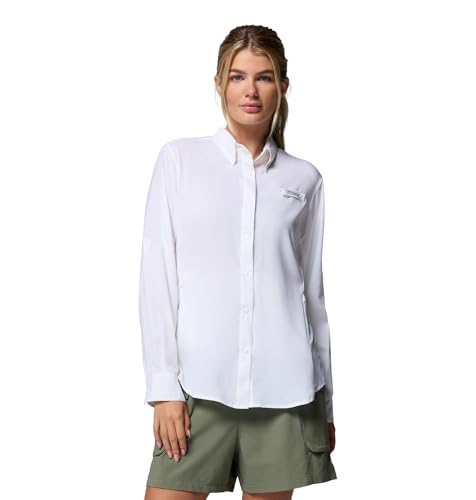
For a woven button-front shirt, fasten the buttons you normally use and stand naturally. Inspect the placket at the bust and lower torso. Persistent gaps or pulling lines between buttons indicate local tension. A shirt that closes only when you draw your shoulders back is not being assessed in an ordinary fishing posture.
Now extend your arms forward and loosely cross them. Some movement in the fabric is normal, but the placket should not become the part that stops you reaching. Notice whether tension starts at the bust, upper arm, or back yoke. That location helps you judge whether the next size would help or whether a different shoulder or torso pattern is needed.
The women's Tamiami II long-sleeve overview is a useful starting point for this kind of button-front comparison. Its name should lead you to the matching women's chart, not a men's Tamiami chart or a differently cut Columbia shirt. Similar model names do not eliminate audience and pattern differences.
Check hip ease before blaming the hem
Put the shirt on over the trousers or shorts you usually fish in. Walk a few steps, sit, lean forward gently, and stand again. If the lower shirt catches at the hips and stays bunched, extra body length may make the bunching worse rather than fixing it. The hem needs enough room to return to its intended position.
A curved hem and a straight hem can distribute coverage differently. Look at the sides as well as the center back. If you want to wear the shirt untucked, consider whether the lower opening moves easily over the widest area it reaches. If you prefer it tucked, check that sitting does not create uncomfortable tension across the front or pull the back free.
A longer torso does not necessarily require a larger bust size. When chest room is already comfortable but the shirt is consistently short, compare garment length and another cut. The guide to length versus width explains the measurement distinction, even where a particular women's model does not offer a dedicated tall version.
A practical try-on sequence
- Relax your shoulders and assess the bust and upper-arm room without posing.
- Reach both hands forward at a comfortable height and observe the back and neckline.
- Lift one arm diagonally to mimic reaching for a nearby item, without forcing the garment.
- Sit in your normal fishing posture and check the front and back hem.
- Turn your head with the hood raised, if present, then return to standing.
Pay attention to whether you need to tug the shirt back into place after each movement. Frequent adjustment can reveal a shape mismatch that is easy to miss in the mirror. Also note whether the cuffs retreat farther than you prefer. Long sleeves are only useful coverage if their length remains suitable during the activity you intend.
With a performance knit, distinguish comfortable contact from fabric held at its limit. A shirt does not have to hang loosely everywhere to fit. However, visible stretching across the bust or shoulders is a reason to reassess the cut, particularly if you are relying on a stated UPF. ARPANSA notes that stretching a knit can reduce its UV protection. More coverage on a product photograph does not resolve excessive tension in wear.
To compare a crew-style option, review the Huk women's Pursuit long-sleeve listing on Amazon with the exact selected variant's chart. Use it to assess a different silhouette, not as proof that every Pursuit generation fits identically. The Pursuit product overview keeps that listing identifiable alongside woven alternatives.
Allow for the layers you actually use
A thin base layer can change how closely a shirt sits across the bust and upper arms. Try the real combination when practical. If you normally wear the shirt next to skin, do not automatically buy extra volume for a hypothetical thick layer. It may be more comfortable to add warmth over the shirt on the occasional cool outing.
Check straps and equipment over the shirt as well. A bulky pocket or seam that seems harmless alone may sit under a vest strap. Use correctly fitted equipment and follow its own instructions. The shirt should work around that fit; it should not be used to excuse a poorly fitting flotation device or restrictive outer layer.
If you alternate between standing and seated fishing, give both positions equal attention. A shirt may have enough front length for standing but gather at the waist when seated. A hem that behaves well in both positions can be more useful than a dramatic length measurement that does not reflect your torso and trousers.
Hood and neckline fit deserve their own decision
Hoods interact with hair, caps, sunglasses, and the neckline. Try your normal arrangement rather than assuming that a larger torso size will automatically create the hood space you need. Raise the hood, look to both sides, and check whether its edge moves into your usual view or pulls the front neck upward.
A higher neckline may offer more covered area but should not make ordinary head movement uncomfortable. A lower neckline may suit your preferred feel while leaving more skin exposed. Those are coverage and design choices rather than evidence that one silhouette fits every woman better. The hooded versus crew-neck guide develops that comparison.
For a hooded reference, the G Gradual women's sun hoodie offers a different form from the two crew and button-front examples. Compare hood movement and sleeve position independently of the headline sun-protection claim. A claimed rating does not tell you whether the shape will suit your head, shoulders, or preferred cap.
When the next size is not the next answer
| What you observe | Try comparing |
|---|---|
| Bust comfortable, waist much looser than desired | A differently shaped torso pattern |
| Hem catches at hips | Lower-body ease and hem opening |
| Shoulders restricted, sleeves already long | Armhole and shoulder construction |
| Body comfortable, hood pulls at neck | Hood depth and neckline geometry |
These observations do not dictate a particular brand. They help you compare the relevant part of the garment. Review comments can contribute useful clues when they describe the exact model and the same issue, but a general 'size up' recommendation cannot account for every proportion. Keep your measurements and movement findings ahead of a crowd verdict.
Consider alterations only after understanding the garment's construction and care label. Changing a hem or cuff can affect coverage and details, and a routine alteration may not be appropriate for every technical shirt. Do not plan to shrink a garment into shape; heat is an unreliable fitting tool and can affect trims or finishes.
Record the fit you want to repeat
When a shirt works, save its full name and size together with a few specific notes: room across the bust, hem behavior sitting, and cuff position while reaching. If you compare garment measurements, use consistent starting points. These details give you a better basis for another purchase than the assumption that all women's fishing shirts use the same proportions.
You can inspect the women's Tamiami II on Amazon for the exact selection and current seller terms. Browse the women's collection when you need a different shape, then return to the same movement sequence rather than restarting with an untested size guess.
The right fit lets the shirt follow ordinary reaches without persistent placket strain, hip catching, or neckline tugging. Keep those observations central and use the fit hub for separate questions about stretch, general measurements, and brand-specific charts.
Frequently asked questions
Which size should I choose when my bust and hips fall in different ranges?
Identify which areas the shirt reaches and where its construction offers limited ease. Compare a size accommodating the limiting area, then check the rest of the silhouette. A different cut may fit better.
Should a women’s performance shirt fit tightly?
It may skim the body if that is your preference, but it should permit ordinary reaching without persistent tension. Stretch should support movement rather than make up for insufficient room.
Why does a fishing shirt fit standing but pull when I sit?
Seated posture changes the space needed around the waist, hips, back, and hem. Try it with your usual trousers and check where it catches or becomes taut.
Final Verdict
Fit a women’s fishing shirt around movement and proportions, then choose the appearance you enjoy. The bust, hips, shoulders, and torso length each deserve a separate check. A larger size can create needed room, but it can also introduce long sleeves or excess fabric elsewhere. Compare another cut when the proportions remain wrong. The most useful evidence is the exact model’s chart plus a careful try-on with your usual layers and seated posture. Save those observations when you find a successful fit, so future decisions build on a clear reference.
Explore the matching collections
Take the next step
Compare your shortlist or explore more fit & sizing.
Revisit the first shirt on Amazon ↗Related field notes
How Should a Fishing Shirt Fit? Measure and Check Movement
Find a fishing shirt fit that works through the chest, shoulders, sleeves and hem, with a clear method for reading size charts and checking movement.
Read the field note →Caring for Fishing Shirts After Saltwater Trips
Build a practical post-trip routine for saltwater fishing shirts, from fresh-water rinsing and stain checks to careful drying, packing, and storage.
Read the field note →Big and Tall Fishing Shirt Fit: Length vs Width
Understand big and tall fishing shirt proportions, compare chart measurements, and diagnose sleeve, torso, and chest fit without guessing a size.
Read the field note →Hooded vs Crew Neck Fishing Shirts: Choose Your Coverage Setup
Choose between a fishing hoodie and crew neck by checking cap fit, neck coverage, casting movement and how each works with your other clothing.
Read the field note →