Pelagic
Men's Aquatek Gunner Hoodie
Long sleeve · Listed UPF 50+
Details & considerationsView on Amazon ↗Plan a deep-sea fishing outfit around the run offshore, time on deck, sun coverage, rain layers, secure footwear, and a dry change for the ride home.
Wear a comfortable long-sleeve fishing shirt, movement-friendly bottoms, and secure footwear that meets the boat operator’s requirements. Add sun coverage for your head, eyes, and exposed skin, and carry a rain layer plus insulation appropriate to the forecast. Test everything with the life jacket you will wear. Deep-sea clothing needs to work during the ride offshore and the return, not just while standing at the fishing rail.
As an Amazon Associate I earn from qualifying purchases. These links take you to Amazon, where purchases take place.
Examples for this guide. Check the exact garment and variation on Amazon.
Long sleeve · Listed UPF 50+
Details & considerationsView on Amazon ↗Long sleeve · Listed UPF 50+
Details & considerationsView on Amazon ↗Imagine the day in three scenes: sitting on the run offshore, working a rod on deck, and heading home in clothing that may be damp. The outfit that feels perfect in one scene can be awkward in another. A loose shirt might flap during transit, a heavy sweatshirt may become cumbersome at the rail, and shorts can leave you wanting more coverage on the return. Build the outfit for the whole sequence.
For a charter, ask about the expected trip length, available shade or cabin space, likely spray, footwear rules, and what personal clothing the crew recommends. Confirm whether there is dry storage for your change of clothes. A large enclosed vessel and an open center-console create different packing priorities even when they leave the same harbor. Do not assume a photograph of the boat shows where passengers will spend most of the day.
Check the marine forecast for the departure area and planned waters close to the trip, then follow the operator's decisions about conditions. The National Weather Service's marine safety guidance emphasizes checking weather and recognizing that conditions can change quickly. Clothing does not make an unsuitable forecast suitable, and a rain jacket is not a response to every weather hazard.
Write a short list of what you will wear and what you will carry. Keeping those categories separate helps avoid wearing every warm layer at the dock simply because there is no room left in your bag. It also exposes gaps: if your only dry top is the one on your body, you have no change after a splash-heavy trip.
A long-sleeve shirt is a practical starting point because it provides more arm coverage than a short-sleeve top while remaining easy to layer. Choose a garment that lets you reach forward, raise your elbows, and turn without the hem climbing dramatically. The shirt should be comfortable before you add tackle belts, rainwear, or a life jacket; those items rarely improve a restrictive fit.
For sun protection, check the exact garment's UPF claim and the coverage you actually get while moving. The Skin Cancer Foundation explains that clothing protects covered skin and that fit and coverage matter alongside the fabric rating. A long sleeve that repeatedly rides above the wrist leaves a gap regardless of the number on the label. Plan separate protection for areas the shirt leaves exposed.
A hood can add useful coverage when it stays in position without blocking your view. Try turning your head fully with the hood up and any cap underneath. Check that the hood does not crowd a rain-jacket collar or bunch under a life jacket. A crew neck can be simpler under several layers, but it leaves more neck coverage to a hat or another appropriate accessory.
The Pelagic Aquatek Gunner hoodie is a long-sleeve hooded example with a listed UPF 50+ claim. The Pelagic Vaportek long sleeve provides a crew-style comparison and also lists UPF 50+. Those shared numbers do not decide hood comfort, sleeve reach, or interaction with your other layers. Choose the form that works on your body and with your equipment.
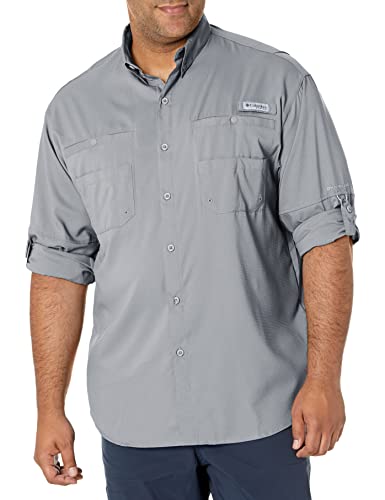
A woven button-front is worth considering if you like an adjustable front opening and organized pockets. Empty bulky objects from any pocket that sits beneath a life jacket or against the rod butt. Check sleeve tabs and loose straps so they do not interfere with handling equipment. For a whole day outside, rolling sleeves is a coverage decision rather than just a styling choice.
Columbia's current Tamiami II long-sleeve manufacturer page describes a back vent and roll-up sleeve tabs. The marketplace Tamiami II example here has discontinued wording, so confirm the exact garment before borrowing current specifications. The point of including it is to show a different outfit format, not to declare woven shirts universally cooler than knits.
| Layer | Job in the outfit | Fit question |
|---|---|---|
| Fishing shirt | Everyday coverage and movement on deck | Can you reach without exposed gaps or pulling? |
| Insulating layer when needed | Extra warmth during cool periods | Does it fit beneath the outer layer without compressing movement? |
| Rain or wind layer | Weather barrier appropriate to the garment's design | Can you close it comfortably over the intended clothing? |
| Life jacket | Separate boating equipment | Does it fit and function as directed over the outfit? |
| Dry change | Clothing for after wet exposure or the return | Will it stay dry until needed? |
Do not ask a sun hoodie to do a waterproof shell's job. A water-repellent claim, including the one in the Aquatek Gunner listing on Amazon, does not establish waterproof protection. Keep the shirt as one layer in the outfit and select any outer weather protection for its actual purpose. If the forecast calls for colder conditions, add appropriate insulation rather than merely wearing two similar thin sun shirts.
Try the full system before departure. Zip the outer layer, put on the life jacket according to its instructions, and simulate ordinary rod movements. Check the back of the neck, underarms, and wrists for crowding. If you must loosen essential equipment to tolerate the clothing, change the clothing arrangement and reassess. A fishing-shirt feature is not a safety certification.
Light, movement-friendly trousers provide more leg coverage and can be useful for a long exposed day. Shorts may suit warm conditions when you have a separate plan for the uncovered skin. Neither choice should restrict a step over a low threshold, a bend to reach a bag, or a seated position during transit. Try those movements instead of judging the waistband only while standing.
Keep pocket loads modest. A phone or hard tackle box in a thigh pocket can press against a rail or seat, and bulky back pockets can be uncomfortable on the ride. Avoid loose dangling accessories near equipment. Select bottoms you can manage easily with the layers you plan to wear; a complicated waistband becomes frustrating in a small onboard bathroom.
Choose footwear that stays attached to your feet and follows the crew's deck requirements. Ask about sole restrictions rather than assuming a particular sneaker or sandal will be accepted. Consider wet-deck traction, toe coverage, and whether your shoes remain comfortable if splashed. This guide does not rank footwear, but the shoes deserve a real decision rather than being whatever you wore to breakfast.
Try your hat, sunglasses, hood, and outer collar together. A brim that clashes with the hood can push it backward; a tight collar can make turning awkward. Secure accessories in a way that suits the boat and does not create a loose tangle around the neck or equipment. Test your view down toward your hands as well as your view across the water.
If you use gloves, make sure cuffs overlap comfortably without restricting your grip or wrist. Thumbholes are useful only if they fit during the actual task and do not pull hard between the fingers. Any face covering should be comfortable to lower and reposition without interfering with vision. Do not equate having more fabric in the bag with having that coverage in place throughout the day.
Keep sun protection practical enough to maintain. Shirt cuffs, hat placement, and exposed neck areas are worth rechecking when layers come off. Use other suitable sun-protection measures for uncovered skin. The UPF label checklist explains what to verify on a garment without turning the outfit decision into a brand ranking.
A compact clothing kit can include a dry top, a spare pair of socks where useful, an appropriate warm layer, and rain protection. Add a full dry change when the trip's wet exposure and storage arrangements justify it. Keep these items in suitable dry storage and separate them from bait, fish-cleaning gear, and damp towels. Put the layer most likely to be needed where it is easiest to reach.
Avoid packing several near-identical shirts while forgetting a weather layer. Each spare should have a purpose. If your main top becomes wet, can you change into something dry? If conditions cool, can you add warmth? If you need to stow a dirty shirt, is there a separate place for it? Those questions produce a more useful bag than a long list of optional accessories.
First, sit down with your knees bent and your arms forward as if you were on the ride out. Check waistband pressure, the hem at your lower back, and whether the collar bunches behind your head. Second, stand and reach across your body as if passing a rod. If the shirt pulls across the shoulders or a pocket catches, solve that before the boat leaves.
Compare long-sleeve fishing-shirt forms if your existing top fails those checks. The Vaportek long-sleeve listing on Amazon is a crew option to review, with its lightweight and ventilation wording treated as listing claims rather than measured superiority. A familiar well-fitting shirt can be the right choice without purchasing an entire new outfit.
For regional adjustments, see the Florida deep-sea outfit guide; for the rest of the trip context, use on-the-water guides. Once home, unpack damp clothing promptly and use the saltwater care routine. A well-planned outfit is one you can move in, adjust when needed, and put back into service without a neglected wet bag waiting for you.
Often they can suit warm conditions, but confirm the boat’s guidance and plan for exposed legs, wet seats, and the return ride. Movement-friendly trousers offer more coverage.
Do not assume so. Sun coverage and water repellency do not establish waterproof performance; carry an appropriate separate weather layer when needed.
Ask about footwear rules, shade or cabin space, expected spray, dry storage, and recommended layers for that trip and season.
Build your deep-sea outfit around the whole day: transit, fishing, and the ride home. Start with a shirt that covers comfortably through rod movements, then add suitable bottoms, secure deck-appropriate footwear, and weather layers with distinct jobs. Check the complete outfit with your life jacket before leaving, and keep a dry change accessible. The most useful preparation is specific to the boat and forecast, so ask the operator about conditions and storage. Product features can help you choose the shirt, but the fit and compatibility of the complete outfit determine how practical it will be aboard.
Compare your shortlist or explore more on the water.
Revisit the first shirt on Amazon ↗Choose a fly-fishing outfit for bank fishing, wading, or a boat, with practical checks for casting, line management, sun coverage, packs, and layers.
Read the field note →Build a practical post-trip routine for saltwater fishing shirts, from fresh-water rinsing and stain checks to careful drying, packing, and storage.
Read the field note →Learn how moisture-wicking fishing shirts move liquid, how that differs from drying, and why fit, humidity, and layers affect the result in use.
Read the field note →Pack for deep-sea fishing in Florida with a location- and season-aware outfit plan covering sun shirts, weather layers, deck footwear, and dry spares.
Read the field note →