What to Wear Fly Fishing
Choose a fly-fishing outfit for bank fishing, wading, or a boat, with practical checks for casting, line management, sun coverage, packs, and layers.
Quick Answer
Choose your fly-fishing clothes around the place you will stand, how you will get there, and the conditions during the session. A comfortable long-sleeve top, suitable bottoms, and footwear matched to the location form the starting outfit. Add waders, weather layers, or insulation only as the situation requires. Test the shirt with your pack and casting motion, and keep loose fabric and overloaded pockets out of the line’s path.
As an Amazon Associate I earn from qualifying purchases. These links take you to Amazon, where purchases take place.
Three relevant shirts to compare
Examples for this guide. Check the exact garment and variation on Amazon.


In this field note
- Choose a starting outfit for your actual access
- Now make the shirt pass the casting test
- Three shirt forms, three useful starting questions
- Keep sun coverage connected to movement
- Plan transitions rather than dressing for one temperature
- Use storage deliberately
- Rehearse the first few minutes at the water
Fly fishing does not require one recognizable uniform. The same rod can be used from a shaded bank, a drift boat, or while wading an exposed river. Those settings change which clothing details matter most. Start by naming the fishing position and the approach, then choose garments that let you cast, manage line, and stay comfortable without constant adjustment.
Choose a starting outfit for your actual access
Walking and fishing from the bank
For bank fishing, begin with the walk. Choose bottoms that let you step over uneven ground and a shirt that works under the pack you will carry. If the route passes close to brush, examine loose sleeve tabs, exposed loops, and open pocket edges that might catch. Your top does not need every possible fishing feature; it needs to remain manageable while you move between casting positions.
Footwear should suit the access surface and local conditions, including any slippery edges you expect to approach. Avoid selecting it solely from an image of someone standing in a river. Carry the weather layer you would need if the walk back took longer than planned. A compact layer is only useful when it is in your bag rather than left in the vehicle because the morning felt mild.
Fishing in waders
Build the lower-body outfit around comfortable layers inside the waders, with room to bend and step. Bulky pocket contents and stiff waistbands can become irritating when enclosed under another garment. Keep the top's hem arranged smoothly rather than packed into a lump at the waist. The dedicated under-wader layering guide covers that system in detail; this master outfit guide focuses on how it connects to the rest of what you wear.
Follow the wader manufacturer's fitting and use instructions, including any belt arrangement. Waders are not a substitute for flotation equipment where needed. Clothing choices should support your guide's or local specialist's advice about the water and access; they do not resolve difficult current, depth, or footing. If a location is new to you, get local information before treating clothing as the final preparation step.
Casting from a boat
In a boat, test the outfit seated as well as standing. The hem can ride up at the back when you lean forward, and a loaded chest pocket may sit beneath a life jacket. Choose clothing that works with the flotation equipment you will wear and the operator's footwear guidance. Keep spare layers in the designated dry storage and avoid spreading loose garments into the line-management area.
A boat session can involve periods of waiting between active casts. If the forecast calls for cool or wet conditions, plan a layer for those quieter periods rather than choosing everything for the warmest part of the casting effort. Put the frequently used layer near the top of the bag so you can change the outfit efficiently at an appropriate moment.
Now make the shirt pass the casting test
Put on your intended pack, vest, or life jacket and move through a relaxed casting motion without a hook attached. Reach forward, lift the elbow, and rotate through the torso. Watch whether the cuff retreats far up your arm or the shoulder panel pulls across your back. A shirt can look roomy while still restricting the particular forward reach you use to manage line.
Check the line-hand side separately. Loose wrist fabric, bulky cuff closures, and accessories attached near the chest can occupy space where you want the line to travel cleanly. This does not mean every pocket or tab is a problem. It means the useful feature is one that works with your casting habits and load arrangement. Empty the shirt pockets during the first fit check, then add only what you actually expect to carry.
Give the collar and hood the same attention. Turn to look behind each shoulder and down toward your hands. A hood that moves across your eyes when you rotate may need a different fit or a different cap underneath. A collar that presses against your neck under a pack strap can become distracting long before the end of the session. These are compatibility problems, not necessarily evidence that the shirt is poorly made.
Three shirt forms, three useful starting questions
| Form | Why consider it? | Question before choosing |
|---|---|---|
| Sun hoody | Integrated head and neck coverage where the hood sits | Can you turn and cast with the hood in place? |
| Long-sleeve crew | Simple front and easy layering | How will you cover the neck and exposed hands? |
| Woven button-front | Adjustable opening and potential pocket organization | Do closures and loaded pockets interfere with your equipment? |
The Simms SolarFlex hoody overview identifies a hooded option, but its marketplace title alone does not provide a numerical UPF rating. Confirm the selected garment's details rather than borrowing specifications from a Bugstopper SolarFlex or a newer edition. The BASSDASH performance long-sleeve tee provides a crew example whose listing explicitly states UPF 50+.
Review the SolarFlex hoody listing on Amazon for the exact option, especially its fit and hood details. It is a candidate for this outfit style, not a claim that one branded hoody is essential to fly fishing. Use an existing shirt if it passes the movement and coverage checks and suits the conditions.
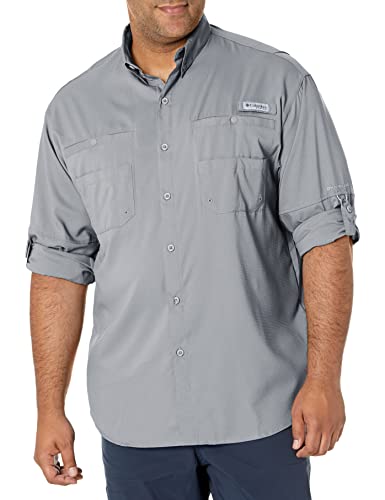
For a woven comparison, Columbia's current Tamiami II long-sleeve page lists pockets, a rod-holder loop, and a back vent. Whether those features help depends on your setup. A pack can cover a vent, and a pocket can be inaccessible beneath another layer. The listed marketplace Tamiami II has discontinued wording, so inspect the particular edition before using current-model details to make the decision.
Keep sun coverage connected to movement
Choose coverage that remains in place when you reach and bend. Long sleeves, a suitable hat, and any neck or hand coverage should work together rather than leaving gaps between pieces. The Skin Cancer Foundation's clothing guidance distinguishes fabric protection from the area actually covered. A high-rated panel cannot protect skin beyond its edge.
Try the outfit after you remove an outer layer too. It is easy to arrange a collar beneath a jacket and overlook the neck once the jacket comes off. If you roll sleeves, recognize that you have changed your coverage. Keep sunglasses and headwear compatible with the hood and your view of the line; a pile of individually sensible accessories can become cumbersome when worn together.
Do not choose a shirt color on an unsupported promise that it will make you invisible to fish. Use color for your practical preferences, visibility to companions when appropriate, and how you want the garment to look after ordinary wear. The dark-versus-light shirt guide addresses that choice separately without turning it into a substitute for careful movement and fishing technique.
Plan transitions rather than dressing for one temperature
A walk to the water, a stationary spell, and a breezy return may feel different. Wear a base outfit that is comfortable during the active part and carry an additional layer when conditions call for it. Put the layer on before you have spent a long period wishing you had packed it. Conversely, arrange your clothing so you can remove a layer at a sensible break without dismantling every piece of equipment.
A rain layer should fit over the shirt and whatever insulation you plan to use. Close it and repeat the casting test; adding sleeves over sleeves can reveal restrictions that were not present in the shirt alone. Check whether the outer cuff traps a wad of inner sleeve material. Keep only the layers you need inside the system rather than assuming that more garments always produce a better outfit.
For variable conditions, a dry spare top can be more useful than a second decorative accessory. Store it separately from wet clothing and fishing gear. If you expect to change beside the vehicle, make the spare easy to reach and keep the used shirt contained for the journey home. This simple arrangement helps the outfit serve the entire outing, including packing up.
Use storage deliberately
Decide what belongs in the shirt and what belongs in the pack. Lightweight frequently used items may suit an accessible pocket, but hard objects can press beneath straps and heavy loads can drag the shirt forward. Try reaching into the pocket while wearing your full setup. A feature that looks organized on a product page may offer little practical storage once a chest pack sits over it.
Keep attachment points tidy and avoid hanging unnecessary items from every available loop. Check the line path with your usual stance and hand position. When adding a new accessory, change one thing at a time so you can identify what causes an interference problem. An outfit with fewer well-placed items often requires less attention during fishing.
Rehearse the first few minutes at the water
At home or beside the vehicle, put the complete outfit on in the order you will use. Adjust hems and cuffs, fit the pack, turn your head, sit or squat, and reach for the items you need. This brief rehearsal can reveal a hood trapped beneath a collar, a trouser pocket that cannot be reached, or a shirt tail that bunches inside waders. Fixing those issues before rigging is easier than managing them mid-session.
If the shirt is the missing piece, compare hooded fishing shirts with a simple crew such as the BASSDASH long-sleeve tee on Amazon. Confirm the selected size and listing details without assuming measured breathability or universal fit. The right choice should solve an identified outfit need.
Use the on-the-water guide hub to adapt the outfit for a different setting. After the trip, note the one or two clothing details that needed repeated adjustment. That feedback is a better basis for the next change than replacing everything at once: improve the sleeve that caught, the hem that bunched, or the layer you could not reach, and keep the pieces that already worked.
Frequently asked questions
Do I need waders to fly fish?
Not for every outing. Bank and boat fishing can use different clothing systems. Choose around the location, access, and local conditions rather than a standard uniform.
Are chest pockets useful for fly fishing?
They can be, if accessible and lightly loaded. Check whether your pack or life jacket covers them and whether closures interfere with line handling.
Can I wear the same shirt for bank and boat fly fishing?
Often yes, if its movement and coverage work in both settings. Recheck seated fit, equipment contact, and weather layers for the boat.
Final Verdict
A fly-fishing outfit should fit the location and the motion. Begin with bank, wading, or boat use, then check the approach, expected weather, casting reach, and equipment contact. Choose a shirt form because its hood, front, or pockets solve a practical need, and confirm the exact garment’s coverage claims. Keep the system easy to adjust and the line-management area tidy. Before buying more clothing, rehearse the outfit you already own with the pack or life jacket you will use. A few well-chosen adjustments can make it more useful than a completely new collection of fishing-branded garments.
Explore the matching collections
Take the next step
Compare your shortlist or explore more on the water.
Revisit the first shirt on Amazon ↗Related field notes
What to Wear Deep Sea Fishing
Plan a deep-sea fishing outfit around the run offshore, time on deck, sun coverage, rain layers, secure footwear, and a dry change for the ride home.
Read the field note →What Does Moisture Wicking Mean in a Fishing Shirt?
Learn how moisture-wicking fishing shirts move liquid, how that differs from drying, and why fit, humidity, and layers affect the result in use.
Read the field note →Caring for Fishing Shirts After Saltwater Trips
Build a practical post-trip routine for saltwater fishing shirts, from fresh-water rinsing and stain checks to careful drying, packing, and storage.
Read the field note →How to Read a Fishing Shirt's UPF Label
Read a fishing shirt’s UPF label with a clear checklist for model identity, rating conflicts, fabric panels, coverage, care, and seller details.
Read the field note →