Buying & comparisons
Best Fishing Shirts: Choose the Design That Fits Your Day
Compare fishing shirt designs by coverage, movement, storage and everyday use, with practical ways to choose a hooded, crew-neck or button-front option.
Quick Answer
The best fishing shirt is the one that solves your biggest clothing problem without creating another. Start with a simple long-sleeve crew for uncomplicated coverage, a hooded shirt when you want an attached neck-covering option, or a button-front when accessible pockets and adjustable openings matter. Compare exact models after choosing the design. A familiar brand name cannot tell you whether the particular shirt fits your casting motion, gear or weather.
As an Amazon Associate I earn from qualifying purchases. These links take you to Amazon, where purchases take place.
Three relevant shirts to compare
Examples for this guide. Check the exact garment and variation on Amazon.

BALEAF
Men's Long Sleeve Sun Shirt
Long sleeve · Listed UPF 50+
Details & considerationsView on Amazon ↗
In this field note
- Choose the correct audience and cut first
- Choose your first priority before your first brand
- Three useful starting points
- Put coverage and fit on separate lines
- Judge features in the context of your equipment
- Compare the selected version, not the model name alone
- Where a premium hooded option fits
- Spend on the difference you will use
- A final comparison you can make at home
A shirt can look ideal on a product page and become an annoyance before the first cast. Perhaps the chest pockets sit directly beneath your pack straps. Perhaps the hood pulls backward when you look down. Or perhaps you bought a close-fitting knit when what you really wanted was a roomy shirt to wear through lunch after fishing. Choosing well starts with identifying that likely annoyance.
This comparison uses documented designs and listing information to build a practical shortlist. It does not award a universal winner or present laboratory results. For the broader range of options, use our fishing shirt buying guides. Here, the goal is to decide which kind of shirt deserves your attention before you compare individual colors and sizes.
Choose the correct audience and cut first
The examples below illustrate different designs rather than suggesting everyone should buy the same men's cut. If you are shopping for a woman or child, start in the relevant range and apply the same design questions to those actual garments. Sizing down an adult shirt is not a dependable substitute for a different set of proportions. Sleeve reach, body length and room through the chest or hips all deserve their own check.
For a gift, useful information includes the exact name and size of a shirt the recipient already likes, plus the feature they wish it had. That is a better starting point than guessing from a general clothing size. It also helps you avoid buying a hood, pocket layout or collar the person does not want.
Choose your first priority before your first brand
Write down one thing your current fishing clothes fail to do. Be specific: sleeves pull above your wrists, a heavy pocket swings when you cast, or a hood tangles with the collar of your jacket. “More performance” is too vague to evaluate. A requirement such as “sleeves that stay comfortable with both arms forward” gives you something to check against photographs, measurements and an indoor fitting.
Next, identify one feature you can happily omit. This keeps a long list of attractive extras from overruling your main need. If everything you carry already lives in a waist pack, numerous chest pockets may add little. If you always prefer separate headwear, an integrated hood is optional. A simpler shirt that works with your existing equipment can be a better purchase than a more elaborate garment.
| Your main need | Design worth comparing first | Question that can rule it out |
|---|---|---|
| A straightforward everyday fishing layer | Long-sleeve crew | Does the sleeve or shoulder pull during a cast? |
| An attached option for head and neck coverage | Lightweight hooded shirt | Does the hood stay comfortable with your chosen cap? |
| Accessible storage and an adjustable front | Button-front shirt | Will pockets or closures sit underneath other equipment? |
| A familiar casual shape | Short-sleeve shirt or polo | Are you comfortable with the additional uncovered arm area? |
Three useful starting points
A button-front for anglers who use shirt storage
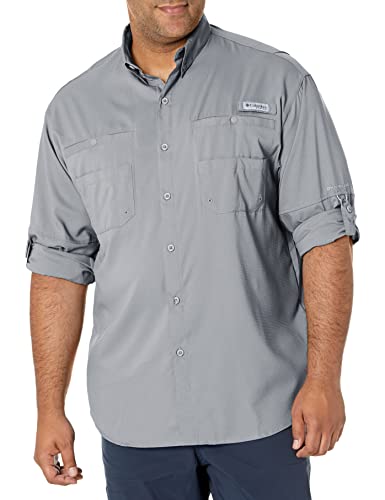
The Columbia Tamiami II long-sleeve listing is a sensible starting point for a utility-shirt comparison. Its name gives you a specific family and sleeve length to investigate. The current Columbia Tamiami II manufacturer page describes chest pockets, a back vent and sleeve tabs. Those features provide concrete things to compare against your routine.
A pocket is useful only if you can reach its contents while wearing your usual gear. Try the movement you use to retrieve a small item, then close the pocket and bend forward. For some anglers, accessible shirt storage can reduce visits to a tackle bag. Others will prefer an uncluttered front. That is a use difference, not a verdict that one style is more serious fishing equipment.
A hoodie for people who want the hood available
The Huk Pursuit Vented Hoodie puts the attached hood at the center of the decision. Choose this shape because you expect to use the hood, rather than because a hoodie looks more technical. Check how its opening sits beside your eyes and whether the neck feels comfortable when you turn to look behind you. An unused hood can become extra material beneath another layer.
Hooded shirts also make a useful packing choice when you prefer fewer separate clothing pieces. The tradeoff is that the hood and body cannot be chosen independently. Someone who likes a particular wide-brimmed hat may prefer a crew neck and keep that headwear arrangement. Our hooded versus crew-neck comparison explores that decision in more detail.
A simple long-sleeve shirt for fewer moving parts
The Baleaf men's long-sleeve sun shirt is an example of a comparatively straightforward shape. Its listing names UPF 50+ and also uses the term rash guard. Neither phrase tells you how closely the selected size will fit, so inspect the sizing description rather than assuming all sun shirts hang loosely or all rash guards compress the body.
For a starting point without buttons or an attached hood, inspect the exact Baleaf listing on Amazon. Use its selected variation to check the size chart and garment details. The reason to consider this type is simplicity: fewer closure and hood decisions leave you free to focus on shoulder movement, sleeve length and how the shirt feels under your normal equipment.
Put coverage and fit on separate lines
A fabric rating and a comfortable fit answer different questions. The Skin Cancer Foundation's clothing guidance explains that UPF concerns transmission through fabric, while coverage depends on the garment. A high number does not describe an uncovered forearm or the gap above a loose neckline. Read the specific rating, then examine the areas that remain exposed in normal use.
Do not buy an uncomfortable size merely to obtain a particular number on the label. Reach forward and upward, sit, and turn your torso. Watch what happens at the wrists, lower back and neckline. A shirt can fit well while you stand still yet move in ways you dislike during fishing. These checks help you choose a usable garment; they are not a substitute for a fabric test.
Judge features in the context of your equipment
Lay out the equipment you actually wear, including a pack, vest or jacket. Now consider where the shirt puts seams, pockets, tabs and fabric overlaps. A rear vent that looks impressive in a photograph may sit beneath the broad back panel of your gear. A chest pocket may be difficult to access once a strap crosses it. Features retain their physical shape, but their usefulness changes with the outfit.
Also think about the motions your fishing involves. Someone seated for much of the day may notice hem bunching and lower-front pocket bulk. Someone repeatedly reaching upward may focus on shoulder freedom. If you carry equipment against your chest, smooth fabric and unobtrusive seams may matter more than a large pocket count. This is where your own routine should outweigh a generic list of features.
Compare the selected version, not the model name alone
Fishing-shirt families can include different sleeve lengths, generations and constructions. The marketplace Tamiami II long-sleeve title in this guide includes “Discontinued.” That wording is useful identification context; it does not establish what stock remains or prove the listing matches every detail of a current manufacturer version. Treat the exact item as the purchase, rather than treating the family name as a specification sheet.
Make a small comparison note for each finalist: exact name, selected sleeve format, stated rating, fit description and seller's item details. Leave a field blank when it is not supplied. An unknown specification is a reason to ask a question or choose a clearer listing, not a reason to fill in the number from another shirt by the same brand. This approach prevents many false comparisons before price enters the decision.
Where a premium hooded option fits
The Simms Bugstopper SolarFlex Hoody is the premium-priced starting point in our three-shirt shortlist, based on the exact listing prices observed during research. Consider it when this specialist hooded model is the design you want, then verify the selected edition’s treatment and garment details. Paying more does not establish a better fit or stronger protection than a less expensive shirt. If you mainly need a straightforward crew or a pocketed utility shirt, the additional spending may not address your actual priority.
Spend on the difference you will use
Once two shirts meet your essential requirements, identify what the more expensive option adds for you. That might be a preferred pocket layout, a hood shape you already know works with your cap, or a fit you have found comfortable in the same model. It might instead be a graphic or brand preference. Personal taste is a legitimate reason to buy something, provided you recognize it as the reason.
A modest wardrobe can be more useful than several nearly identical shirts. One simple crew and one utility button-front cover different tasks. Two hoodies with the same role may offer little extra flexibility unless frequent trips make a wash-and-wear rotation worthwhile. Our budget fishing shirt guide considers value without relying on temporary sale prices or arbitrary price brackets.
A final comparison you can make at home
- Put on the shirt with the trousers and headwear you expect to use.
- Repeat your ordinary reaching and casting movements without holding hooks or sharp tools.
- Add your usual outer layer or carrying equipment and check for awkward overlaps.
- Confirm that pockets, closures and the neckline work in a seated position as well as standing.
- Read the garment label before deciding how it will fit into your normal laundry routine.
If the utility layout remains your strongest preference, revisit the selected Tamiami II option on Amazon and check that the variation is the one you intend to buy. If you are still deciding between silhouettes, browse the long-sleeve collection with your main requirement in mind. A short, reasoned shortlist is more useful than a page full of shirts that solve different problems.
Frequently asked questions
Is there one fishing shirt that works best for everyone?
No. A utility button-front, an uncomplicated crew and a hoodie solve different clothing problems. Choose the design that fits your equipment and movements, then compare exact versions within that design.
Should the highest UPF number decide my purchase?
A stated rating matters, but it does not describe fit or all exposed skin. Consider the exact rating together with sleeve length, neckline, comfortable movement and the coverage you will actually maintain.
Do I need separate shirts for boat and shore fishing?
Only if your clothing requirements differ enough to justify them. Compare the storage, outer layers, headwear and movements involved in each setting before adding another garment.
Final Verdict
Choose a fishing shirt by working backward from the day you expect to have. The Tamiami II listing is worth investigating for a utility layout, the Pursuit Vented Hoodie for an attached hood, and the Baleaf long-sleeve option for a simpler sun-shirt shape. None receives a blanket best-in-test claim. Set your required coverage, check movement with your gear, and compare the actual version offered. If a feature does not improve your routine, it need not decide the purchase. A shirt that earns repeat wear is a stronger choice than one bought for an impressive list of unused extras.
Explore the matching collections
Take the next step
Compare your shortlist or explore more buying & comparisons.
Revisit the first shirt on Amazon ↗Related field notes
Buying & comparisons
Simms SolarFlex vs Bugstopper: Choosing the Right Hooded Layer
Compare Simms SolarFlex and Bugstopper hoodies by exact model identity, treatment evidence, hood fit, sleeve coverage, movement, and care requirements.
Read the field note →Features & design
Choosing Fishing Shirts for Hot Weather
Choose a fishing shirt for hot days by comparing airflow, coverage, fit and wet-fabric comfort, with practical checks for humid weather and layered gear.
Read the field note →Care & durability
Can You Put Fishing Shirts in the Dryer?
Can fishing shirts go in the dryer? Follow a practical drying decision guide for care labels, damp hoods, prints, travel, and unfinished stains.
Read the field note →On the water
What to Wear Shore Fishing
Choose a shore fishing shirt for the walk in, exposed banks, wind, and changing conditions, with a practical spare-shirt and packing plan for the day.
Read the field note →