What to Wear Shore Fishing
Choose a shore fishing shirt for the walk in, exposed banks, wind, and changing conditions, with a practical spare-shirt and packing plan for the day.
Quick Answer
For shore fishing, choose a shirt you can comfortably walk, cast, and sit in, then carry an accessible layer for changing conditions. A long-sleeve crew keeps the setup simple; a hood adds optional head and neck coverage; a button-front offers an adjustable opening and pockets. Judge the shirt with your actual bag straps and casting movements. Bring a separate dry spare when the return journey or likely splash exposure makes changing useful.
As an Amazon Associate I earn from qualifying purchases. These links take you to Amazon, where purchases take place.
Three relevant shirts to compare
Examples for this guide. Check the exact garment and variation on Amazon.

In this field note
Start with the walk back
The most revealing question for a shore fishing outfit is often what you will want to wear when you leave. You may walk out after standing in wind, carrying a damp shirt against your skin, or spending longer at an exposed spot than expected. Unlike someone who can reach into a nearby cabin, you may have only what fits in your bag. Select your shirt and spare layers for that complete sequence. The shoreline is the setting, but the distance to your vehicle and the ease of changing determine how much flexibility you need to carry.
This guide concentrates on shirts and the small packing decisions around them. It is not a complete clothing or access checklist for every shore, surf, jetty, or riverbank. A maintained pier, open beach, and brushy reservoir path ask different things of a garment. Your starting point is the actual route and fishing position: exposed or shaded, seated or standing, close to shelter or a long walk away. Record those conditions in ordinary terms before getting drawn into product names. They make it easier to explain why a feature would help you.
Work through three parts of the outing
On the approach, your shirt sits beneath a bag and moves with your arms. At the fishing position, you may spend more time relatively still while the collar and sleeves provide the coverage you chose. During the return, the bag may be fuller and the shirt less clean. A garment needs to serve all three stages adequately. Choosing only for the most comfortable moment can produce an outfit you dislike during the longest part of the trip. Carrying a removable outer layer often handles that variation more simply than wearing a heavier shirt throughout.
Try your planned shirt with the bag loaded as it normally would be. Walk around, lean forward, and reach toward an imaginary rod tip. Notice whether the shoulder strap sits on a bulky seam or pulls the collar sideways. A back vent under a broad pack panel is partly covered during the approach, so assess comfort with the pack in place. Once the bag comes off, the same shirt may feel different. That change is a reason to test the combination, not evidence that all vented shirts are good or bad for shore access.
Decide what stays covered while casting
Long sleeves are convenient when you want continuous arm coverage without managing separate sleeves. Their usefulness depends on remaining comfortable enough to keep down. Reach forward and hold your hands at the height you usually work with tackle. If the cuffs retreat far up your arms or the fabric pulls tightly across your back, examine the fit before concentrating on the printed rating. The Skin Cancer Foundation explains that coverage and fit are part of sun-protective clothing selection, alongside fabric properties. Uncovered areas remain outside the shirt's coverage.
A hood gives another adjustment, particularly when you alternate between wearing and removing it. Check it with the cap or hat you already use. Turn your head toward each shoulder and look down at your hands. If the hood tugs across your throat or needs constant repositioning, it may be inconvenient for the way you fish. A separate crew and preferred headwear can be easier for some anglers. This is a practical compatibility choice rather than a contest over which format has more features. The garment you comfortably keep in its intended position is the relevant one.
The men's Pelagic Vaportek Hoodie is a specific hooded example whose marketplace title states long sleeves, UPF 50+, and a ventilated lightweight design. Those are listing claims, not a measured comparison with every other shore shirt. Use the hooded collection to compare neck openings and visible construction. A hood does not supply coverage wherever it happens to hang, and a shirt's water-repellent description does not turn it into a rain garment. Keep those functions separate when deciding what belongs in your bag.
Match the front of the shirt to your shore setup
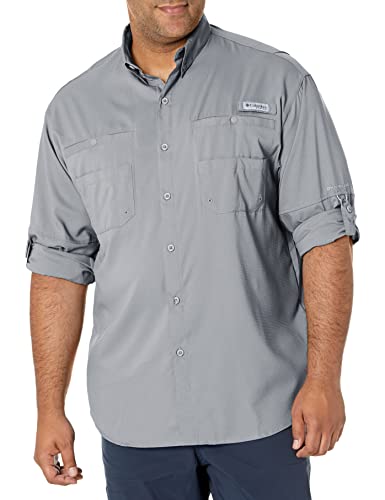
A simple crew leaves fewer front closures to interact with straps and can work well when your tackle storage lives in a bag. A button-front lets you adjust the opening and may place useful pockets within reach. Neither automatically makes more sense from shore. Think about where you actually keep a phone, glasses, permits, or a small cloth. If your bag already has accessible compartments, additional shirt pockets may merely duplicate storage. If you put things in chest pockets, check them while leaning over rather than assuming their contents stay secure.
Columbia's current Tamiami II long-sleeve page identifies a mesh-lined back vent, chest pockets, roll-up tabs, and a secured collar. That makes it a useful design reference for anglers considering a woven utility shirt. The selected Tamiami II Amazon listing includes a discontinued designation, so confirm the edition and details rather than assuming every current page feature applies without checking. Look specifically at whether the pockets remain usable beneath your bag straps and whether their placement suits your ordinary hand movements.
Sitting changes the fit question
If you use a chair or sit on a permitted bank position, assess the shirt while seated with your bag or belt in place. A long front hem may fold into your lap; a tight rear hem may rise as you lean forward. Neither issue can be diagnosed from chest size alone. Put a hand behind your neck and then extend both arms forward to see whether the shirt stays comfortable. Avoid storing hard or sharp items where the seated position presses them against you. Shirt storage is convenient only when it remains comfortable during your actual use.
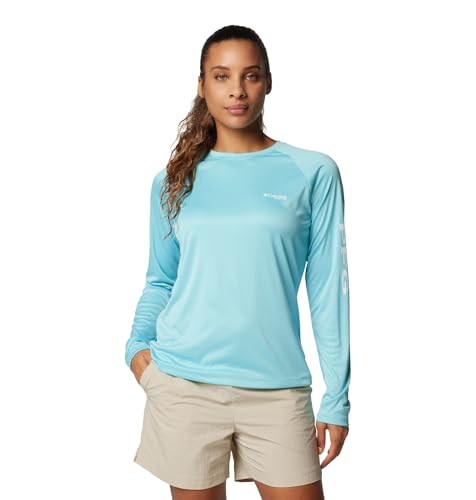
For a shirt cut for women, start with the Columbia Tidal Tee II long-sleeve example and examine the selected size chart rather than borrowing a men's size recommendation. Bust and hip ease can affect how the fabric moves when seated or casting. This does not mean every woman needs a particular cut; it means the dimensions should suit the person wearing the garment. If one area fits but another binds, comparing a different cut is often more useful than repeatedly sizing up and accepting excessively long sleeves.
Pack for the change you can reasonably expect
Build a small shirt-related packing group: your fishing shirt, the outer layer you expect to adjust, and a spare if your exposure or travel home makes one useful. Keep the spare isolated from wet tackle and worn clothing. A waterproof claim for a bag deserves its own verification, but even simple organization matters: a clean shirt should not share an open compartment with dripping items. Columbia's fishing cleanup guidance includes spare clothing in a dry bag and fresh-water cleanup after salt exposure. Follow individual garment labels when the trip ends.
Put the layer you are most likely to need first near the opening of the bag. If wind usually becomes uncomfortable while you are stationary, burying that layer under everything else adds an unnecessary obstacle. Keep the spare packed until you need it rather than using it as a towel or wrapping tackle in it. After a change, contain the worn shirt separately for transport and unpack it when you get home. A sealed compartment is useful for the journey but should not become the garment's long-term storage place.
Do not base the entire plan on drying overnight
For an outing that includes an overnight stay, a quick-dry claim is useful information but not a timetable. Available hanging space, indoor conditions, and how wet the garment becomes all affect whether it is ready in the morning. Keep enough flexibility that one damp shirt does not decide whether you fish the next day. A spare can be the same style or a different format with a distinct role. If you like a button-front for travel and a hooded knit at the shore, assigning those roles can avoid packing several near-identical backups.
A final rehearsal before you leave
Lay out the shirt and packed bag the evening before your trip. Dress in the complete combination, tighten the straps as usual, sit down, and make several slow casting motions without equipment. Open any shirt pockets you intend to use. Raise and lower the hood, then add the outer layer. The purpose is to catch friction between pieces while you can still change them easily. If a small adjustment solves the problem, make it; if not, select the simpler shirt that gives you fewer interruptions. This rehearsal is more informative than counting advertised features.
When comparing final options, inspect the Vaportek Hoodie Amazon page for the exact men's hooded variant and its care label details, or revisit the Tidal Tee product page for a simpler long-sleeve format. Treat the selected garments as examples of different arrangements, not a claim that one shirt wins across beaches, piers, and inland banks. The layering guide helps resolve interactions with jackets; the on-the-water hub covers other trip contexts. A successful shore outfit leaves you ready for the route home as well as the first cast.
Frequently asked questions
Is a short-sleeve shirt enough for shore fishing?
It may suit your preferences and conditions, but it leaves more arm skin uncovered. Consider how you will manage that exposure and whether a comfortable long-sleeve option would simplify the outfit.
Should I bring a spare shirt for a short shore session?
Consider the likely wet or dirty exposure and the journey home rather than duration alone. A nearby vehicle makes a spare easy to leave accessible; a long walk requires a more deliberate carrying decision.
Are chest pockets useful when fishing from the bank?
They can be if you use them for small items and their closures suit your movements. Test access with bag straps on, then lean forward to check how the contents sit. Avoid duplicating storage you already find convenient.
Final Verdict
Choose your shore shirt around the approach, fishing position, and return journey. A long-sleeve crew is straightforward under bag straps, a hood gives an optional coverage adjustment, and a button-front offers a different opening and storage arrangement. Check the shirt with a loaded bag and while seated, because those interactions reveal more than a standing fit alone. Carry an accessible outer layer and decide whether a protected spare is worth the space for your particular outing. The most useful outfit is one you can keep comfortable and organized from the walk in until you are ready to leave.
Explore the matching collections
Take the next step
Compare your shortlist or explore more on the water.
Revisit the first shirt on Amazon ↗Related field notes
What to Wear Deep Sea Fishing in Florida
Pack for deep-sea fishing in Florida with a location- and season-aware outfit plan covering sun shirts, weather layers, deck footwear, and dry spares.
Read the field note →How to Remove Sunscreen Stains from Fishing Shirts
Treat sunscreen marks on fishing shirts, including white fabric, greasy collars, and stains found after washing, with careful label-based steps.
Read the field note →How to Get Wrinkles Out of Fishing Shirts
Get wrinkles out of fishing shirts with label-safe drying, careful pressing, and travel packing tips for woven shirts, performance knits, and logos.
Read the field note →How Fishing Shirt Vents Work: Openings, Mesh and Airflow
Understand cape vents, mesh backs and side panels on fishing shirts, including how fit, wind, backpacks and fabric coverage affect their usefulness.
Read the field note →