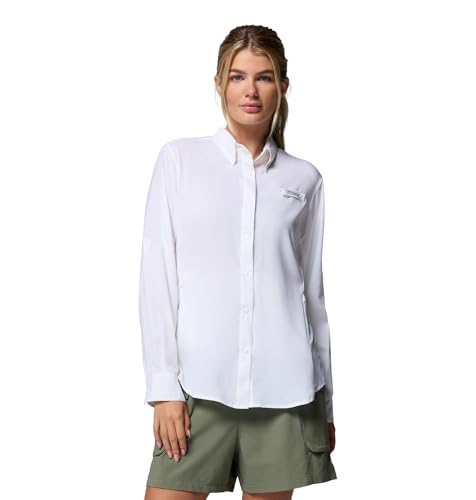
BALEAF
Women's Stretchy Long Sleeve Sun Shirt
Long sleeve · Listed UPF 50+
Details & considerationsView on Amazon ↗Treat sunscreen marks on fishing shirts, including white fabric, greasy collars, and stains found after washing, with careful label-based steps.
Lift excess sunscreen from the shirt, check both the garment and treatment labels, and pretreat with a compatible laundry product before washing. Inspect the mark before drying or ironing. Greasy smears and orange discoloration may need different assessment, so do not assume bleach or a household mixture is the answer. White fabric, UPF branding, and stain-resistant wording do not remove the need to follow the exact shirt’s care restrictions.
As an Amazon Associate I earn from qualifying purchases. These links take you to Amazon, where purchases take place.
Examples for this guide. Check the exact garment and variation on Amazon.
Sunscreen marks often appear in the places you handle without thinking: the collar you adjust, the cuff you pull down, or the shoulder touched while putting on a bag. Sometimes the mark is obvious immediately. Sometimes a yellow or orange shadow becomes noticeable only after washing. The first job is to identify what you see and avoid making the next care decision harder.
| What you notice | First action | What to postpone |
|---|---|---|
| A fresh blob or smear | Lift excess carefully and check care directions | Vigorous rubbing across a wider area |
| A greasy-looking collar | Open the fold and inspect both sides | Treating only the visible edge |
| An orange or rusty shadow | Record the sunscreen and water context | Assuming any whitening product is appropriate |
| A mark found after washing | Keep the garment out of the dryer while reassessing | Heat as a shortcut to finishing the laundry |
These categories guide inspection; they do not diagnose every stain by color. Fish residue, body oils, dirt, and sunscreen can overlap on the same shirt. If you are unsure what caused a mark, say so when asking a manufacturer or cleaner for advice. An accurate description is more useful than confidently naming the wrong contaminant.
The care guide collection covers other fishing-clothing problems. This article stays with sunscreen transfer, collar buildup, white fabric, and marks that survive or appear during laundering.
Laundry manufacturer Ariel explains that sunscreen contains several ingredients and that avobenzone can react with minerals in water to leave rusty discoloration. This helps explain why an oily smear and an orange shadow should not automatically receive identical treatment. It does not establish the chemistry of every individual stain.
Keep the sunscreen container or a photograph of its ingredient list if the problem recurs. Record which shirt was affected and whether the mark changed after washing. This information can help a cleaner or product support team narrow the options. You do not need to interpret every ingredient yourself or change your sun-protection routine based solely on a laundry problem.
A stain-removal article also cannot determine which sunscreen is suitable for your skin. Follow the sunscreen's use directions and seek appropriate advice if you have a product question. The clothing goal is to manage transfer and care effectively, rather than reduce application below the product's instructions to keep a collar white.
Lift excess product using a clean, smooth edge or absorbent material without forcing it deeper or spreading it across the shirt. Support the fabric so you are not pulling a thin panel tight while handling the spot. Pay attention to nearby graphics, seams, and contrasting trim before applying any treatment.
Read the garment label and the laundry product directions together. Confirm fabric suitability, testing instructions, permitted contact time, and whether the product should be applied to wet or dry fabric. A generic online instruction is less specific than those two labels. If they conflict, do not improvise a compromise with an unusually strong solution.
Ariel's sunscreen removal sequence uses removal of excess, liquid-detergent pretreatment, and washing within the garment's permitted temperature. Adapt only within the shirt and treatment instructions. The source does not authorize every liquid detergent on every performance finish, nor does it require the same temperature for all fishing shirts.
After treatment, wash as directed and inspect the affected area before drying. Look from more than one angle and check the reverse side if accessible. If the shirt is wet and a shadow is difficult to assess, avoid rushing into heat merely to complete the routine. A careful pause is a useful part of stain removal.
Unbutton or open the collar as its design permits. Spread it so the inner contact surface is visible, and inspect the seam where the collar joins the shirt. A narrow visible line may be only part of the affected area. Treating the top edge while leaving the folded interior untouched can lead to an unsatisfying result.
Work with the fabric rather than scrubbing across it aggressively. A soft-looking performance shirt may have mesh, stitching, or prints near the neck that deserve care. If pretreatment directions permit application to the area, apply it evenly to the actual mark and follow the stated dwell time. Do not leave a treatment on indefinitely because the collar is stubborn.
The women's Tamiami II Long Sleeve listing provides a white, collared example. The baleaf Women's Stretchy Long Sleeve Sun Shirt listing title also names white, but in a different garment format. Their light color creates a shared appearance concern; it does not create identical care permissions.
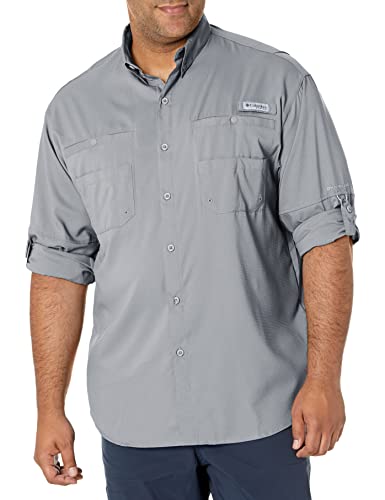
Inspect the white women's Tamiami II listing on Amazon if you want a visual reference for the collared shape. Follow that garment's delivered instructions. A care statement for a men's edition or a similarly named Columbia shirt should not silently substitute for the women's model.
With a printed shirt, identify whether the mark sits on bare fabric, ink, embroidery, or a seam joining different materials. A treatment tolerated by one area may have different restrictions elsewhere. When contacting support, a clear photograph showing the whole affected section and the care tag is more useful than a close crop of the stain alone. Include the shirt's color and model so the response addresses the construction you own rather than a general white-clothing example.
Before reaching for bleach, read the exact restriction and any print or trim instructions. A white synthetic fishing shirt may prohibit a treatment that another white garment permits. Columbia's current men's Tamiami II Long Sleeve page, for example, lists no bleach. This is a model-specific instruction, not a rule inferred from color.
Whitening products also differ from one another. A product marketed for white laundry still needs to be suitable for the shirt's fibers and finishes. Avoid treating chlorine bleach, oxygen products, rust removers, and household acids as equivalent ways to remove any pale-fabric stain. Select a compatible product for the problem, and never combine cleaning chemicals.
If a rusty mark persists, ask a professional cleaner or the garment manufacturer about an appropriate treatment and describe what has already been used. An ordinary household rust remover is not automatically a textile product. Keeping the shirt intact is more useful than making the stain smaller while damaging the surrounding fabric.
Stop before the dryer or iron. Note whether the stain was previously visible, where it appeared, and whether other items in the load show similar discoloration. Check the sunscreen information and the treatment used. A change after laundering is useful evidence, but it does not by itself prove that detergent, water, or a single ingredient caused the problem.
Inspect the washing instructions again before trying a second process. If a compatible pretreatment can be repeated under its directions, that may be an option. If the first attempt changed the color or feel of the fabric, seek advice instead of increasing the dose. You want the next step to be justified by the garment and stain, not by frustration.
Columbia's fishing-clean guidance advises against high drying heat that can set stains. Our drying guide handles the later decision. Keeping heat separate from unresolved stain treatment gives you a clearer point at which to reassess.
A completed dryer cycle does not mean you must discard the shirt, and it does not justify promising complete recovery. Start with the same label and treatment review, then decide whether another compatible attempt is reasonable. Tell a cleaner that heat has already been applied. That detail belongs in the history of the stain along with previous products.
If the remaining shadow is only cosmetic and the fabric is sound, you may choose to keep the shirt for uses where appearance matters less. Do not infer a new UPF value from the stain's presence or removal. A laundry inspection can reveal damage, but it cannot recertify fabric performance after an unknown treatment history.
Follow the sunscreen's application instructions and allow for any stated timing before dressing or activity. Handle the shirt with clean hands when practical, and avoid wiping product onto cuffs or hems. Check the collar when you take the garment off, rather than letting repeated marks accumulate unnoticed across outings.
For a long trip, a spare shirt can simplify the transition to a meal or drive home. It also lets you separate the marked garment for prompt care. Choosing a different color may change how visible stains appear, but it does not remove the residue. The shirt color guide discusses that appearance tradeoff.
The white baleaf long-sleeve listing on Amazon is another example whose actual label should guide care. Browse women's fishing shirts if you are comparing replacement designs, but do not assume a new model is stainproof. A repeatable inspection and pretreatment routine is the more useful long-term solution.
Keep a small stain note for any shirt that repeatedly causes trouble: sunscreen used, mark location, permitted treatment, and result. That record makes future care more targeted. It can also help you decide whether a demanding white collar fits your routine, without changing the sun-protection measures you rely on.
Only consider a bleach product if the exact garment and treatment labels permit it, and do not assume it suits rusty sunscreen discoloration. Some white performance shirts prohibit bleach. Seek specific advice for persistent marks.
Some sunscreen ingredients can interact with minerals in water and leave rusty discoloration, but color alone does not diagnose your stain. Keep the sunscreen and wash details and reassess before applying heat or another treatment.
Open the collar and inspect the full contact surface and seam. Use a compatible pretreatment according to its directions, wash as permitted, and check both sides of the area before drying.
Handle sunscreen stains as a garment-specific cleaning problem. Fresh excess, a greasy collar, and rusty discoloration deserve different inspection questions even when they occur on the same shirt. Match the treatment to the care label, work on the affected area, and pause before heat if a mark remains. White fabric does not authorize bleach, and a stain-resistant claim does not promise effortless cleanup. For persistent or changing marks, keep the sunscreen and treatment history and seek specific advice. Consistent checks after each outing can make care easier without compromising the sunscreen directions you follow.
Compare your shortlist or explore more care & durability.
Revisit the first shirt on Amazon ↗Wash fishing shirts and UPF clothing with a label-first routine for stains, fasteners, detergent, rinsing, and drying across different fabrics.
Read the field note →Remove fish blood from fishing shirts with cold-water first steps, fabric-safe pretreatment, and a check-before-drying routine for fresh or dried stains.
Read the field note →Choose a fishing shirt for hot days by comparing airflow, coverage, fit and wet-fabric comfort, with practical checks for humid weather and layered gear.
Read the field note →Identify a fishing shirt’s rod-holder strap, tell it apart from sleeve tabs and utility loops, and check whether its placement fits your tackle routine.
Read the field note →