Can You Put Fishing Shirts in the Dryer?
Can fishing shirts go in the dryer? Follow a practical drying decision guide for care labels, damp hoods, prints, travel, and unfinished stains.
Quick Answer
You can tumble dry a fishing shirt only when its care label permits it, using the allowed setting. Some fishing shirts allow a dryer, so a universal ban is inaccurate; other garments or details may need air drying. Check stains before applying heat, keep hoods and pockets from remaining folded wet, and confirm the whole shirt is dry before packing. The UPF label alone does not answer the dryer question.
As an Amazon Associate I earn from qualifying purchases. These links take you to Amazon, where purchases take place.
Three relevant shirts to compare
Examples for this guide. Check the exact garment and variation on Amazon.

In this field note
- The decision begins with three possible answers
- Why both common universal rules fail
- Before either method, check the wash result
- If the label allows tumble drying
- If you are air drying
- When you need the shirt tomorrow
- What to inspect after an accidental hot cycle
- Finish with storage, not merely the end of a cycle
The washer has finished and you need the shirt for tomorrow. The fastest-looking option is to add it to the next dryer load, but the right decision takes one quick check first: what does this garment's label allow? Fishing branding is not a drying instruction. A collared cotton shirt and a printed sun hoodie may need different handling even when they were worn on the same trip.
The decision begins with three possible answers
Find the drying instruction on the care tag. If it permits tumble drying, identify the allowed setting and any restrictions. If it specifies another method, follow that method. If the instruction is missing or unclear, identify the model and obtain the matching care information before choosing a heat cycle. The useful answer is conditional to your shirt, not a blanket yes or no.
| What the label says | Your next step |
|---|---|
| Tumble drying is permitted | Use the allowed setting after checking stains and load compatibility |
| A specific air-drying method is required | Arrange the garment as directed with enough space to dry |
| No readable drying instruction | Retrieve matching manufacturer instructions before using heat |
| Special restrictions for print or trim | Apply those restrictions to the whole drying decision |
Read washing and ironing instructions separately. Permission to machine wash does not automatically allow tumble drying. Permission to iron does not specify the correct dryer cycle. Keep each instruction attached to its own task, and use the care guide hub if a different stage of maintenance is the issue.
Why both common universal rules fail
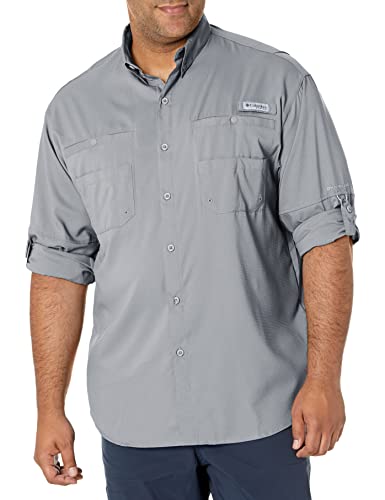
The statement that all fishing shirts must avoid dryers is too broad. Columbia's current Tamiami II Long Sleeve page and Bonehead Short Sleeve page both list tumble drying. Their garment labels should resolve settings. That is enough to show that fishing clothing is not one dryer-prohibited category.
The opposite claim is also too broad. Those two examples do not authorize tumble drying for every performance top, hood, graphic, or brand. A lightweight feel does not reveal the temperature limit, and a UPF number describes a different property. Use the instruction for the complete garment instead of inferring permission from fiber, weight, or purpose.
The Tamiami II Long Sleeve listing includes discontinued wording. If you own or buy that example, compare its care tag with the model information rather than automatically importing every instruction from the current version. The Bonehead Short Sleeve listing provides a second format to evaluate through its own tag.
Before either method, check the wash result
Spread the shirt enough to inspect treated areas. Look at collar folds, cuffs, pocket corners, and the lower front. If a visible stain remains, pause the drying decision and address the stain within the permitted care instructions. Heat should not be the next step merely because the garment has completed a wash cycle.
Columbia's fishing-cleanup advice cautions that high drying heat can set stains and scents. That makes an inspection particularly useful after fish residue or sunscreen treatment. Our odor guide and sunscreen stain guide provide focused next steps when cleaning is not finished.
Check for a twisted sleeve or bundled hood as well. Untangling the garment now helps either drying method. Inspect closures and small objects again if there is any chance something remained in a pocket. Drying should begin with a prepared shirt, not a compact wet knot straight from the bottom of the washer.
If the label allows tumble drying
Match the setting, not just the cycle name
Select the permitted heat level and other applicable instructions. Dryer interfaces vary, so read the appliance controls rather than assuming a familiar cycle name has the same settings everywhere. If you cannot find the required option, use another drying method allowed by the garment instead of choosing the nearest-looking high-heat shortcut.
Consider the rest of the load. Heavy items and snagging hardware may make poor companions for a lightweight shirt even if their temperature requirements overlap. Follow the machine's loading instructions and give the garment room to move. A load chosen only to save one cycle can make it harder to manage the shirt's actual care needs.
Keep the endpoint practical
Use the garment and appliance instructions to avoid unnecessary continued drying. Check the shirt when appropriate for the selected cycle, and pay attention to thicker areas such as collars and pocket layers. Do not assume that a dry-feeling torso means every section is ready for storage. Equally, do not automatically run another full heated cycle because one folded area needs attention.
If a permitted alternative lets you finish a remaining damp area on a rack, that may fit your routine. The important point is to stay within the instructions throughout the process. A mixed method is not an excuse to use a prohibited dryer first and call the final hanging step gentle care.
See the Tamiami II Long Sleeve listing on Amazon for a collared example whose actual label should guide that decision. It appears here to illustrate garment-specific drying, not as a claim that it dries faster than other shirts.
If you are air drying
Use the arrangement specified by the label: hanging, line drying, flat drying, or another stated method. These instructions are not interchangeable for every garment. Support the shirt in a way that avoids unnecessary pulling at one narrow point. Make room for sleeves, hood, and body instead of folding all the wet fabric over a single crowded rail.
Choose a clean drying area with appropriate airflow and follow any shade instruction. Avoid improvising with a heater, radiator, oven, or other concentrated heat source. Air drying means allowing the garment to dry under an appropriate arrangement, not placing it dangerously close to heat because the dryer was unavailable.
Check contact points during the process. A cuff pressed against the torso or a hood folded inside itself can remain damp after an exposed panel feels dry. Reposition only as the garment's instructions allow. The objective is complete drying while preserving the intended shape, rather than a neat-looking display that hides wet layers.
Hoodies require an extra final check
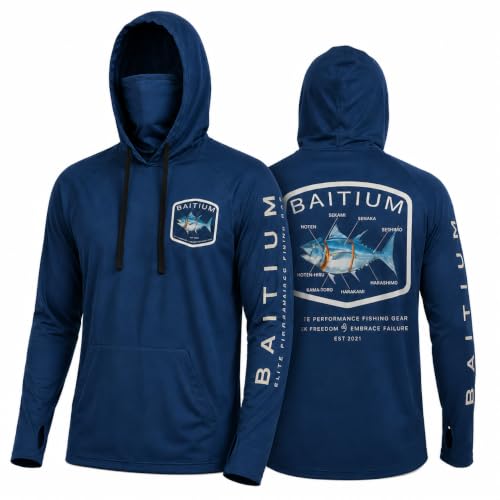
The Baitium Bluefin hoodie is a useful example of a garment with an additional layered area. Inspect the hood seam and neckline before packing. Its UPF50 and recycled-polyester title claims do not supply a dryer setting; read its care tag before choosing a method.
A hood can also cover part of the back panel while hanging. Arrange it as allowed so you can assess both areas. If the shirt has any face covering or unusually layered neckline, inspect those sections too. This is a design-specific dryness check, not a prediction that every hoodie needs a certain number of hours.
When you need the shirt tomorrow
Start by estimating the time you actually have and checking the permitted method. Do not promise yourself a fixed drying time based on another shirt or a quick-dry marketing phrase. Room conditions, the garment's wet state, and the drying arrangement can differ. Build in time to inspect the result before you need to pack.
If the available equipment cannot follow the label, use a different clean shirt for the next outing. That practical fallback is preferable to making an unverified heat decision under time pressure. A spare need not match the first shirt exactly, but it should provide the coverage and fit you planned to use.
For travel, photograph the care label before leaving. Check the accommodation's laundry options early enough to use an allowed alternative if necessary. Do not wait until departure morning to discover that the only machine setting is unsuitable. Our travel guide considers packing and care together.
What to inspect after an accidental hot cycle
Let the shirt cool and evaluate it in its normal dry state. Check fit, seams, print, and any visible distortion. Record the cycle used if you need to ask the manufacturer about the outcome. A shirt that still looks familiar should not automatically be declared unchanged in every property, but an accident also does not prove a specific amount of damage.
If sleeves or torso dimensions seem different, use the shrinkage guide to compare them consistently. Do not respond with another hotter cycle to even things out or with aggressive stretching. The next step should address the observed problem, with garment-specific advice when necessary.
Finish with storage, not merely the end of a cycle
Check the whole garment before folding or packing. Collars, cuffs, pockets, and hood seams deserve attention because they are easy to overlook. Put the shirt in a clean, dry location away from wet fishing gear. If you are packing for departure, keep any still-damp item separate until you can finish drying it appropriately.
The Bonehead Short Sleeve listing on Amazon is another example to compare when planning a manageable care routine. The button-front collection groups similar shapes, but the care label still determines the method. Choose future shirts partly for instructions that work with your available space and laundry equipment.
A useful routine ends when the shirt is genuinely ready to wear and store. Once you know its allowed method, you can prepare the drying space or settings before washing. That small habit removes the last-minute dryer guess and makes maintenance more predictable from one trip to the next.
Frequently asked questions
Does UPF 50 mean my shirt cannot go in a dryer?
No. UPF does not supply a drying instruction. Some rated garments permit tumble drying and others have different restrictions. Follow the actual care label and allowed setting.
Can I dry a fishing hoodie on a hanger?
Use hanging only if consistent with its care instructions. Arrange the hood and body so folded layers do not remain wet, support the garment appropriately, and check seams before storage.
What if I accidentally used a hot dryer cycle?
Let the shirt cool, then inspect fit, seams, graphics, and visible changes. Record the cycle and ask the manufacturer about any concern. Do not assume a specific UPF loss or try another heat cycle to correct the fit.
Final Verdict
The dryer question has a garment-specific answer: use it when the care label permits it, at the allowed setting, after checking that cleaning is complete. When another method is required, arrange the shirt so sleeves, pockets, and hood layers can dry fully without unnecessary strain. Avoid invented drying times and last-minute heat shortcuts, especially while traveling. If an accidental cycle changes the garment, inspect the result and seek targeted advice. A shirt is ready for the next trip when the entire garment is dry, its fit remains usable, and its care instructions have been respected.
Explore the matching collections
Take the next step
Compare your shortlist or explore more care & durability.
Revisit the first shirt on Amazon ↗Related field notes
How to Wash Fishing Shirts and UPF Clothing
Wash fishing shirts and UPF clothing with a label-first routine for stains, fasteners, detergent, rinsing, and drying across different fabrics.
Read the field note →How to Get Fish Smell Out of Fishing Clothes
Remove fish smell from fishing clothes with a targeted routine for residue, pockets, washing, repeat odors, and clean storage after the trip.
Read the field note →Do Fishing Shirts Shrink?
Do fishing shirts shrink? Learn how to check a fit change, compare garment measurements, read care limits, and avoid using heat to resize shirts.
Read the field note →Dark vs Light Fishing Shirts: Color and Comfort
Compare dark and light fishing shirt colors for practical comfort, visible stains, outfits, and documented UPF without guessing what fish see.
Read the field note →