Can You Wear Fishing Shirts Casually?
Wear fishing shirts casually with clothes you already own: compare crews, polos, hoodies, and button-fronts, then adjust fit, color, and proportions.
Quick Answer
Yes, fishing shirts can work as everyday clothing. Start with the same fit and styling questions you would ask of any shirt: does the hem suit your bottoms, does the collar sit comfortably, and do the graphics fit the occasion? A plain crew is easy for errands, a polo offers a collar without chest-pocket bulk, and a button-front can work open or closed. Use your existing wardrobe before buying pieces to match.
As an Amazon Associate I earn from qualifying purchases. These links take you to Amazon, where purchases take place.
Three relevant shirts to compare
Examples for this guide. Check the exact garment and variation on Amazon.


In this field note
- Begin with one pair of bottoms you already like
- Make room for a roomy button-front
- Decide how much fishing identity you want visible
- Fit should survive an ordinary day
- Match the occasion without inventing a dress code
- Explore graphics without changing the garment requirement
- Run a small wardrobe trial before shopping
The fishing label does not confine a shirt to the boat ramp. A shirt that fits comfortably and works with your ordinary clothes can move into errands, casual meals, travel days, or a relaxed weekend. The question is less whether wearing it is allowed and more which details you want to emphasize. A bright team-style graphic announces itself. A simple polo or subdued button-front may blend into the rest of your outfit. Neither is inherently better; they create different impressions and suit different preferences.
Begin with one pair of bottoms you already like
Take out a pair of jeans, chinos, or shorts that you wear regularly. Try the fishing shirt with them before imagining a new wardrobe. Look at the combination from the front and side, then sit down. Does the shirt's volume feel balanced with the bottoms? Does the hem stop at a place you like? Is the waistband comfortable beneath it? These familiar questions are more useful than a rule declaring all technical shirts casual or all fishing pockets unfashionable. You can make a clear decision from the outfit you actually see.
If the combination feels busy, simplify one visible element. A patterned shirt can sit beside plain bottoms. A large rear graphic may work best when the rest of the outfit feels uncomplicated to you. If everything is very loose, you might prefer a straighter pair of trousers rather than buying a smaller shirt that restricts your shoulders. These are styling experiments, not universal body-shape rules. Use a mirror or a photograph to compare two options, and keep the one that looks and feels intentional to you.
Let the format set the starting point
A crew can be worn much as you would wear a casual long-sleeve tee. A hooded fishing shirt adds a hooded silhouette, although the garment may not provide the warmth you associate with a sweatshirt. A polo introduces a collar without a full front opening. A woven button-front gives you several choices: closed, partially open at the neck, or open over another shirt. Start with the format that already feels natural in your wardrobe. Familiarity makes it easier to spot the one detail that needs adjustment.
The Columbia Low Drag Offshore polo is a useful example if you want a fishing-associated shirt with a polo neckline. Its selected title establishes that short-sleeve format, not a dress-code approval or a complete technical specification. Try a similar collar with the jacket or sweater you already wear. If it lies comfortably and the hem works with your chosen bottoms, the shirt may fill an everyday role without any special styling technique. Browse the polo collection when that is the silhouette you are trying to find.
Make room for a roomy button-front
Some fishing button-fronts are deliberately generous. Columbia describes the current Bonehead short sleeve as an oversized relaxed fit and identifies cotton poplin with several chest pockets. That creates a different visual effect from a fitted casual dress shirt. Treat its volume as part of the design before deciding it is the wrong size. If the shoulders, chest, and movement feel suitable, you may simply need bottoms with proportions you prefer alongside it. If the garment is excessively long or the sleeves dominate your arms, another cut may suit you better.
Wearing a button-front open over a simple tee can reduce the visual emphasis on the pocketed front. Check that the inner shirt's neckline and hem look deliberate together, and that the extra layer remains comfortable for the conditions. A longer undershirt showing beneath a shorter outer shirt may be a look you enjoy or one you prefer to avoid. There is no reason to force it. Try a different tee from your drawer first. The most economical styling adjustment is often changing an existing companion garment rather than replacing the fishing shirt.
Tucked, untucked, or open
A full tuck can tidy the outline, but a large amount of extra fabric may bunch around the waist. Test it while seated, not just standing still. An untucked hem may be easier if its length works with your outfit. Wearing the shirt open creates another line down the front and can make a roomy cut feel less enclosed. These are options to compare, not instructions for a particular gender or body type. A shirt with a strongly shaped hem or long tail may simply suit one arrangement better than another in your wardrobe.
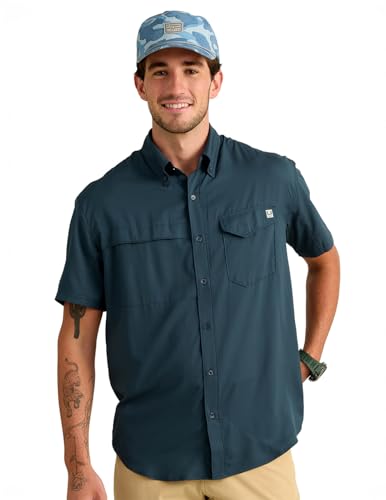
Inspect the Bonehead short-sleeve Amazon listing if you want that utility-shirt look, and compare the exact selected item with the manufacturer reference before relying on material or fit details. The HUK Tide Point Solid Short Sleeve is another ready-made option whose title describes a button-down, even though product category labels can sometimes be broad. Use the actual pictures and garment description to judge the front construction. For casual wear, the shape you see matters more than a category word that may not capture every design detail.
Decide how much fishing identity you want visible
Some people want a shirt that openly expresses their interest in fishing. Others want the comfort of the garment with less visible branding. Both uses are reasonable. Examine front, sleeve, and rear views before buying: a small chest logo can coexist with a much larger back print. If you plan to wear the shirt under a jacket, consider how it looks when the jacket comes off. You do not need to hide fishing graphics to wear them casually, but you should choose them deliberately instead of discovering their scale after delivery.
Color coordination can stay simple. Pick one color already present in your shoes, trousers, or outer layer, then see whether the shirt sits comfortably beside it. Neutral does not have to mean dull, and bright does not have to mean difficult. A strong shirt color with otherwise familiar pieces can look straightforward. Avoid treating color as proof of sun performance; the exact garment's construction and rating need separate attention. Styling advice answers how the outfit looks, while a protective-clothing claim needs its own evidence and applies only as specified.
Keep useful features quiet when you do not need them
Empty pockets usually create a cleaner outline than overfilled ones. If you carry everyday objects in shirt pockets, check how they pull the front out of shape. A phone may fit but still make the shirt hang unevenly. Roll-up tabs can be used if you like the result and the garment supports that arrangement; they do not need to be displayed simply because they exist. A rod-holder detail can remain unused. Technical features are optional tools, and casual wear does not require finding a new purpose for every one of them.
Fit should survive an ordinary day
Sit at a table, reach for a shelf, and put on the outer layer you normally carry. A shirt that looks balanced while standing can become irritating if its hem catches under you or the collar presses against your neck. The same practical checks used for fishing remain helpful, but the movements may differ. If you work at a desk, try the sleeve position while your forearms rest forward. If you drive, check the shoulders and collar while seated. Comfort is part of why you are considering the shirt for everyday use.
A hood can work casually, but consider where it rests when lowered. Under a jacket it may create a stack behind the neck; over a light overshirt it may sit more comfortably. Do not assume that a fishing hoodie substitutes for your warm casual hoodie just because both have hoods. Confirm the exact garment's intended construction and assess the warmth you need separately. If you mainly want a smooth neckline for layering, a crew can be simpler. This is a wardrobe compatibility decision rather than an argument for one shirt format across all occasions.
Match the occasion without inventing a dress code
For informal errands and relaxed social settings, your own preference usually does most of the decision-making. For a workplace, club, restaurant, or event with stated expectations, check those expectations directly. A collar alone does not establish that a fishing shirt meets a particular dress code. A shirt may be neatly styled and still differ from what an organizer requests. If you are uncertain and the occasion matters, use a garment you already know is appropriate instead of relying on broad claims that polos or button-fronts are always acceptable.
A separate clean shirt can also help when casual wear follows an actual fishing session. Styling cannot remove fish odor, salt residue, or visible stains. Change if the worn garment no longer suits the next activity, and care for it according to its label. Columbia's product-care guidance recommends prompt attention to stains and clean, dry storage. The fish-odor guide addresses cleanup in more detail. Keeping the fishing and social roles distinct when necessary is a practical way to get more use from the wardrobe without asking one dirty shirt to do everything.
Explore graphics without changing the garment requirement
The Costa Del Mar shirt collection includes Species Shield and Topwater short-sleeve tees alongside technical hooded entries. That lets you compare a casual graphic direction with a more covered silhouette within one label. Choose the role first: a familiar fishing logo does not make a casual tee equivalent to a technical hood. The individual model pages keep those choices separate.
Run a small wardrobe trial before shopping
Choose two fishing shirts you own and create two outfits with each using existing clothes. Wear the combinations around home long enough to notice the hem, collar, and sleeve behavior. Save a photograph of the versions you like. If none works, identify the recurring issue: too much graphic, too long a hem, too much pocket bulk, or a neckline you dislike. Then shop for that specific difference. This process avoids buying another near-identical shirt and hoping it somehow behaves differently with the same trousers.
If a simple collared option is the missing piece, examine the Low Drag Offshore polo on Amazon and compare its shape with your everyday polo. For a full opening, revisit the Tide Point product example or the button-front collection. The on-the-water guide hub includes other ways to use and pack fishing shirts, while the travel guide explains how a casual option can participate in a small trip rotation. Buy only after you know which role your present clothes leave unfilled.
Frequently asked questions
Can I wear a fishing shirt with jeans?
Yes. Try the shirt with jeans you already like, then check hem length and the balance of loose or fitted shapes. Plain jeans can be an easy companion for a graphic or pocketed fishing shirt.
Does a fishing polo count as business casual?
That depends on the specific workplace or event. A collar alone does not establish dress-code acceptance. Check the stated expectations and consider the shirt’s graphics, fabric appearance, fit, and condition.
Should a fishing button-front be tucked in casually?
Use whichever arrangement suits its hem and your outfit. A full tuck can bunch if the cut is very roomy; untucked or open over a tee may be more comfortable. Compare the options while seated as well as standing.
Final Verdict
Fishing shirts can fit naturally into everyday clothing when their proportions, graphics, and condition suit the occasion. Start with your existing jeans, shorts, or chinos and let the shirt format guide the combination. A polo provides a straightforward collar, a crew behaves like a casual tee, and a roomy button-front gives several wearing options. Adjust one element at a time before shopping, and verify any dress-code expectations where they matter. The goal is not to disguise the shirt’s fishing identity; it is to choose how much of that identity you want visible and build an outfit you enjoy wearing.
Explore the matching collections
Take the next step
Compare your shortlist or explore more on the water.
Revisit the first shirt on Amazon ↗Related field notes
A Guide to Fishing Shirt Pockets: Layout, Closures and Useful Storage
Compare fishing shirt pocket layouts, flap and zipper closures, access under straps and drainage questions before deciding what belongs in your shirt.
Read the field note →Cotton vs Polyester Fishing Shirts: Drying, Feel, and Use
Compare cotton and polyester fishing shirts for damp outings, everyday comfort, fabric feel, and care, with model-specific examples and tradeoffs.
Read the field note →Should You Use Fabric Softener on Fishing Shirts?
Learn when to skip fabric softener on fishing shirts, how to interpret care instructions, and what to check after an accidental softener wash at home.
Read the field note →Packing Fishing Shirts for a Multi-Day Trip
Work out how many fishing shirts to pack using outing days, laundry access, rewear preferences, drying uncertainty, and a compact clean-and-worn system.
Read the field note →