Cotton vs Polyester Fishing Shirts: Drying, Feel, and Use
Compare cotton and polyester fishing shirts for damp outings, everyday comfort, fabric feel, and care, with model-specific examples and tradeoffs.
Quick Answer
Cotton can be appealing when familiar fabric feel and casual wear matter most, while a polyester performance shirt is often a useful starting point for repeated perspiration or splashes. But fiber alone does not settle the choice: construction, thickness, fit, and finishes change the result. Ordinary cotton and engineered performance cotton are not identical, and a polyester label does not prove a drying-time advantage over every other shirt.
As an Amazon Associate I earn from qualifying purchases. These links take you to Amazon, where purchases take place.
Three relevant shirts to compare
Examples for this guide. Check the exact garment and variation on Amazon.


In this field note
- Where cotton can make sense
- Where polyester becomes worth investigating
- Wet feel includes more than retained water
- Compare like with like when possible
- Do not turn breathability into a fiber slogan
- Durability is about the shirt's weak points
- Care may decide between otherwise suitable shirts
- Sun protection remains a separate check
- Choose around your change-of-clothes plan
Think about the part of the outing after the shirt gets damp. Will you change soon, remain on the water for hours, or head straight to lunch? Cotton versus polyester becomes a more useful decision when you place it in that sequence. Dry feel, familiar texture, and everyday appearance may carry different weight depending on what happens next.
The comparison also needs a clear baseline. An ordinary cotton tee, a cotton-poplin button-front, and an engineered cotton performance fabric should not be treated as identical. Neither should every polyester shirt be assumed to share the same lightness or wicking behavior. Start with the form you want and examine the material within that form.
Where cotton can make sense
If you already enjoy the feel of a cotton shirt during relaxed outdoor wear, that preference is relevant. A fishing shirt does not have to maximize every technical claim to serve a short, low-exertion outing well. A familiar fabric, useful pockets, and a comfortable fit can be a reasonable combination when you can change readily if it becomes damp.
Columbia's current Bonehead short-sleeve page specifies cotton poplin and an intentionally roomy fit. It provides a concrete example of cotton in a fishing-specific woven shirt, rather than only in a graphic tee. That current manufacturer example does not establish the composition or dimensions of every Bonehead edition.
Cotton's tendency to take up moisture is part of the decision, not an automatic disqualification. Cotton Incorporated describes traditional cotton as absorbent in its TransDRY technology explanation. It also describes an engineered approach designed to reduce that uptake and spread moisture. The useful lesson is that fabric engineering can change behavior; the presence of cotton does not prove a shirt uses that technology.
Where polyester becomes worth investigating
For an outing with repeated perspiration, limited opportunity to change, or frequent light splashes, a polyester shirt carrying a relevant quick-dry or moisture-management claim may be a practical place to start. That is a shortlist strategy, not a finding that polyester wins every comparison. Verify the claim and evaluate the finished garment.
Polyester can be used in both structured wovens and soft performance forms. Columbia's current Tamiami II long-sleeve example specifies polyester ripstop and a wicking feature. A hooded knit made from polyester presents a different silhouette and different fit questions. The fiber name does not tell you which design you will prefer.
Do not equate a slippery hand feel with measured wicking, or a lightweight description with a universal drying time. Product language should identify what the shirt is designed to do. A meaningful comparative claim would need equivalent evidence, rather than two unrelated marketing descriptions.
Wet feel includes more than retained water
How a damp shirt feels depends on where moisture collects and how the fabric lies against the body. A roomy woven may stand away in some areas; a supple knit may follow your torso closely. A pocket or doubled cuff can remain noticeably damp after a single-layer panel feels dry. These construction differences can outweigh the impression you expected from the fiber alone.
Ask whether you dislike cling, heaviness, stiffness, or simply a visible wet patch. Those are different concerns. A shirt can solve one and leave another unchanged. Describing the specific discomfort helps you compare actual fabrics rather than searching for a material that promises to eliminate every unpleasant sensation.
Also separate perspiration from a splash. A water-repellent finish on the outside may influence a brief splash without proving how the inside moves sweat. The wicking guide addresses liquid transport, while quick drying concerns moisture leaving the textile.
Compare like with like when possible
| If you are comparing | Keep these differences visible |
|---|---|
| Cotton tee and polyester hoodie | Hood, sleeve coverage, cut, and fabric structure |
| Cotton and polyester button-fronts | Weave, pockets, vents, and intended ease |
| Cotton blend and polyester blend | Every declared fiber and any elastic component |
| Ordinary cotton and treated cotton | The exact treatment claim and garment identity |
The Guy Harvey cotton graphic long-sleeve shirt explicitly identifies cotton in its listing title. It is a useful casual-form example, but the title does not provide a universal UPF or quick-dry promise. If those properties matter, request exact information rather than inferring them from its fishing artwork.
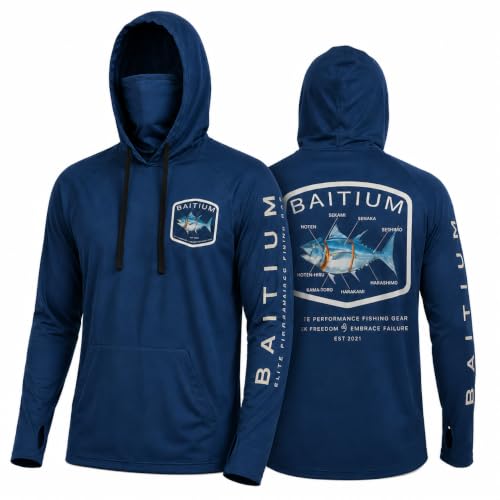
The Baitium Bluefin hoodie identifies recycled polyester and a hooded form. The hood changes coverage and neck fit, so a comparison with the cotton tee includes more than material. Review the Guy Harvey cotton long-sleeve listing on Amazon and the polyester example with those differences explicitly recorded.
Do not turn breathability into a fiber slogan
Airflow depends on how the cloth and garment are built. An open knit, a closely woven panel, a vented back, and fabric compressed beneath a vest do not move air in the same way. Cotton does not guarantee that a shirt will feel airy, and polyester does not automatically mean a sealed or stuffy garment.
Inspect the actual vent arrangement and where another layer will cover it. Consider fit as well: a shirt with room around the torso can feel different from the same cloth stretched close. For the separate question of heat and humidity selection, use the hot-weather shirt guide. A material preference should not replace a realistic look at the whole outfit.
When evaluating manufacturer cooling wording, keep comfort claims separate from claims about body temperature. A shirt can be described as lightweight or moisture managing without proving that it prevents heat-related problems. Choose the garment for its supported features and avoid reading a broad health guarantee into its fabric name.
Compare one ordinary day, not an imagined extreme
Write a short sequence for your usual trip: drive to the access point, walk with gear, fish, and change or continue wearing the shirt. Mark where dampness would become inconvenient. If most of that day resembles casual wear, a familiar cotton option may remain appealing. If the shirt must stay on through repeated wetting, give the exact polyester candidate's moisture features more weight. This exercise keeps the material choice connected to your routine.
Durability is about the shirt's weak points
A useful durability comparison asks where the garment will be rubbed, snagged, stretched, or repeatedly opened. Examine cuff edges, seams, pocket attachments, and areas beneath straps. Fabric thickness and surface construction can influence those contact points. A broad natural-versus-synthetic label does not provide a service-life estimate.
Printed graphics and finishes deserve attention too. Their care may limit treatments that the base cloth could otherwise tolerate. If you want a shirt mainly for casual wear, appearance after washing may matter as much as fishing-specific features. If you regularly work around rough surfaces, look for construction evidence rather than assuming a fiber will make the garment damage proof.
Keep wear observations specific when reading reviews. A report about a cuff seam is different from a complaint about a fabric snag. Neither establishes that every cotton or polyester shirt will fail in the same way. Exact model identification makes such comments more useful.
Care may decide between otherwise suitable shirts
Read the actual care label before choosing stain treatments, bleach, drying heat, or ironing. The finished garment includes more than its main fiber. Columbia's current Bonehead and Tamiami examples list different care permissions, so one universal fishing-shirt laundry rule would erase meaningful differences. Use the label on the shirt you own for the final settings.
Do not use shrinkage as a fitting strategy. Buying a large cotton shirt and expecting a precise reduction is unpredictable, just as assuming a polyester shirt cannot change with inappropriate heat is unwise. Choose the fit first and maintain it according to the garment instructions. The shrinkage guide handles that narrower question.
For a trip with limited laundry access, consider where the garment will dry and whether you have room for a spare. The ability to change out of a damp shirt may influence your choice more than a marginal material preference. Avoid treating a quick-dry description as permission to pack a shirt while it is still damp.
Sun protection remains a separate check
Neither cotton nor polyester supplies a UPF number by name. Look for a stated rating for the exact model and assess coverage in use. The current Bonehead manufacturer example reviewed here does not list a UPF rating; it should not inherit one from another Columbia fishing shirt. A graphic tee likewise should not acquire a rating simply because it has long sleeves.
ARPANSA identifies construction and tension among the factors affecting clothing protection. That reinforces why a material-only judgment is incomplete. The UPF-rated collection can help locate stated claims, which still need to be checked against the selected garment.
Choose around your change-of-clothes plan
For a relaxed outing followed by a quick change, familiar cotton feel may deserve substantial weight. For a longer session with repeated dampness, investigate a polyester performance shirt whose exact features match the problem. If you prefer cotton but need moisture management, look for actual engineered-fabric evidence rather than assuming an ordinary cotton shirt has it.
The Baitium Bluefin listing on Amazon gives you a specific polyester option to inspect, while the Bonehead short-sleeve overview keeps the woven cotton example in view. These are different forms, so choose the silhouette first if the distinction matters more than the fiber.
Use the fabric guides to resolve the remaining questions individually. A sound choice can favor cotton for your routine or polyester for another outing without requiring either material to win every possible scenario.
Frequently asked questions
Is cotton a bad choice for every fishing trip?
No. It can suit relaxed outings and people who value its familiar feel, especially when changing is easy. Consider expected dampness, construction, coverage, and exact garment claims.
Does every polyester fishing shirt wick sweat?
No. A fiber label alone does not establish the finished fabric’s liquid-transport behavior. Look for a model-specific wicking claim and any supporting evidence.
Can a cotton fishing shirt have performance features?
Yes. Cotton can be engineered or treated for particular properties. Verify that the exact garment actually uses the claimed technology rather than applying another fabric’s description.
Final Verdict
Choose cotton or polyester in the context of the whole outing: expected dampness, access to a change of clothes, preferred feel, and the form you want to wear afterward. Ordinary cotton often deserves more attention to moisture uptake, while a polyester performance option deserves scrutiny of its actual claims rather than automatic credit. Compare equivalent designs where possible and read the care label before committing. Neither fiber removes the need to verify fit, coverage, and the particular features that make the shirt useful to you.
Explore the matching collections
Take the next step
Compare your shortlist or explore more fabric & sun coverage.
Revisit the first shirt on Amazon ↗Related field notes
What Are Fishing Shirts Made Of?
Learn how fishing shirt fibers, knit or woven construction, stretch, and finishes work together—and which details to verify on the garment label.
Read the field note →Long Sleeve vs Short Sleeve Fishing Shirts: Decide by Use and Coverage
Compare long and short sleeve fishing shirts by arm coverage, cuffs, movement and layering, including when roll-up sleeves are a useful compromise.
Read the field note →Polyester vs Nylon Fishing Shirts: Compare the Finished Fabric
Compare polyester and nylon fishing shirts through construction, wet feel, stretch, and care. Learn why fiber names alone cannot name a winner.
Read the field note →Do UPF Shirts Work When Wet?
Do UPF shirts still protect when wet? Check wet-use evidence, fit changes, swim claims, and spare-shirt planning before your next fishing trip.
Read the field note →