What Are Fishing Shirts Made Of?
Learn how fishing shirt fibers, knit or woven construction, stretch, and finishes work together—and which details to verify on the garment label.
Quick Answer
Fishing shirts may use polyester, nylon, cotton, or blends, sometimes with elastane for stretch. The fiber label is only part of the answer: knit or woven construction, fabric density, garment cut, and added finishes also shape how a shirt feels and behaves. Read the composition and care label together, then verify claims such as wicking, quick drying, and UPF for the exact model instead of assigning them to an entire fiber category.
As an Amazon Associate I earn from qualifying purchases. These links take you to Amazon, where purchases take place.
Three relevant shirts to compare
Examples for this guide. Check the exact garment and variation on Amazon.

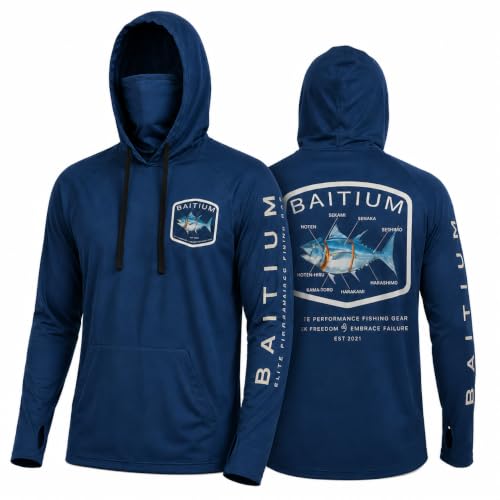
Men's Bluefin Recycled Polyester Hoodie
Long sleeve · Listed UPF 50
Details & considerationsView on Amazon ↗
Men's Aquatek Gunner Hoodie
Long sleeve · Listed UPF 50+
Details & considerationsView on Amazon ↗In this field note
- Read the fiber line first
- Construction changes the experience
- Fabric weight and density are different clues
- Three material examples to investigate
- Separate a fiber from a finish
- Understand wicking and quick drying as separate jobs
- UPF does not come from the fiber name alone
- Read care as part of the material decision
Two fishing shirts can share a fiber name and feel almost unrelated. One may be a crisp button-front shirt with a back vent; the other may be a soft hooded knit. Asking what fishing shirts are made of therefore has two answers: the raw fibers and the way those fibers have been turned into a finished garment.
The most useful reading order is composition, construction, cut, then claims and care. That sequence helps you distinguish what is physically present from what the manufacturer says it does. It also prevents a familiar word such as polyester from standing in for every other buying decision.
Read the fiber line first
Composition tells you which fibers are declared and, when provided, their proportions. Polyester and nylon are synthetic fiber families commonly used in performance apparel. Cotton is a plant-derived fiber that appears in casual tees and woven fishing shirts. Elastane, also called spandex, can be included to provide elastic stretch. Blends combine fibers rather than belonging neatly to one performance category.
Do not infer an exact composition from a brand name, a fabric's sheen, or the word performance. A line can contain several materials, and a renamed edition may differ from the previous one. If the shirt has separate mesh panels or trim, look for whether the label distinguishes them from the main body fabric. The headline composition may not describe every component.
| Label information | What it helps answer | What remains to check |
|---|---|---|
| Polyester, nylon, cotton, or a blend | Which fibers form the fabric | Construction, feel, and verified performance |
| Elastane or spandex | Whether an elastic fiber is declared | Usable stretch and recovery in the finished shirt |
| Recycled fiber statement | A stated material-origin attribute | Exact scope and the garment's other properties |
| Care instructions | Permitted cleaning and drying methods | Any separate requirements for trims or finishes |
Construction changes the experience
Woven fabrics
Woven cloth interlaces yarns and can create a more structured shirt body. A woven fishing shirt often uses a collar, placket, and pockets, although those features are design choices rather than properties of the fiber. Some wovens have little give; others gain useful stretch from yarn design, construction, or an elastic blend. Do not judge mobility from the word woven alone.
Columbia's current Tamiami II long-sleeve page identifies polyester ripstop. Its current Bonehead short-sleeve page identifies cotton poplin. Those exact manufacturer examples show how two broadly similar button-front fishing silhouettes can use different fibers and fabric structures. Their names should not be generalized to every edition or sleeve variant.
Knitted fabrics
Knits form fabric from intermeshing loops. That structure can provide give even when elastane is not listed. Many crew and hooded performance shirts use knit construction, but a photograph or the word performance is not enough to settle the details. Look for construction information and assess whether the fabric moves comfortably in the directions you need.
A knit and a woven made from the same fiber can differ in surface feel, drape, airflow, and how they respond to a strap. Those differences explain why comparing only percentages can be unhelpful. For the design-level distinction, see button-up versus performance fishing shirts; the polyester versus nylon guide addresses the narrower fiber comparison.
Fabric weight and density are different clues
Lightweight describes a low-weight impression or specification, while an open construction describes spacing within the fabric. The two are related only indirectly. A thin, closely built fabric can feel light without looking like mesh. A shirt with substantial pockets or a double-layer hood can weigh more as a garment than the main body fabric suggests.
Ask what a published weight refers to before comparing it. Fabric mass per unit area and complete garment weight are not interchangeable, and garment size changes the amount of material involved. Where comparable numbers are unavailable, use the description as a starting point rather than inventing a ranking of the lightest shirts.
Air movement also depends on the garment arrangement. A vent needs an unobstructed path, and a close-fitting outer layer may cover it. A loosely cut body can feel different from a close fit made with the same cloth. The separate vent guide explains that feature without assuming a particular fiber is always the most breathable.
Three material examples to investigate
The Bonehead short-sleeve listing is relevant when you want to examine a traditional woven fishing-shirt form. The manufacturer example cited above supplies cotton-poplin context, while the exact marketplace selection should still be checked for its own label and variant. That is a more reliable approach than treating every collared fishing shirt as nylon.
The Baitium Bluefin hoodie explicitly names recycled polyester in its listing title. That tells you a material claim is being made; it does not establish a universal advantage in softness, drying speed, or service life. Inspect the Baitium Bluefin listing on Amazon for the full composition and care information of the selected garment.
Pelagic's current Aquatek Gunner manufacturer page names nylon and four-way stretch for that model. It is a useful counterexample to the assumption that every stretch shirt must list elastane. When considering the Aquatek Gunner marketplace option, confirm the edition rather than extending the current page's composition to the whole Aquatek range.
Separate a fiber from a finish
Wicking, stain release, water repellency, odor control, and sun-protection language may refer to different combinations of fiber, construction, and treatment. These claims are not synonyms. A water-repellent surface is not a waterproof garment, and an odor-control treatment does not remove the need for cleaning. Read the exact wording and the intended scope.
Cotton Incorporated's TransDRY description provides an example of engineered cotton moisture management using treated yarns. It supports a limited but useful point: untreated everyday cotton and specially engineered cotton should not automatically be assigned identical behavior. It does not establish that any cotton shirt in this collection uses that technology.
Likewise, recycled polyester remains a composition and sourcing statement, not a drying-time test. A branded cooling name should lead you to an explanation of its mechanism or evidence rather than a claim that it lowers body temperature. Compare the feature you need and the evidence offered for it.
Understand wicking and quick drying as separate jobs
Wicking concerns the movement of liquid through or across a textile. Drying concerns the loss of moisture from it. A shirt may spread perspiration over a larger area but remain damp when the surrounding conditions limit evaporation. A fabric that sheds a brief splash may have little to say about moving sweat away from the skin.
AATCC lists separate methods for wicking, drying, liquid moisture management, and water-vapor transmission. That separation is useful when reading product language: one word should not silently certify all the others. The wicking explanation and quick-dry explanation cover these tasks individually.
UPF does not come from the fiber name alone
A composition label cannot substitute for a model-specific rating. Construction, fit, and other fabric characteristics affect UV transmission. ARPANSA explains that fabric tension and construction matter, including the effect of stretching a knit. Avoid assigning an unlisted rating because another shirt with the same fiber has one.
Coverage remains a garment question. A short sleeve and a long sleeve made from the same rated cloth leave different areas uncovered. A hood only covers the area it actually covers when worn. Use the UPF-rated collection to identify stated ratings, then check the exact listing and fit.
Turn a vague listing into a precise question
If a title says only technical fabric, ask for the fiber composition of the selected color and model. If it says stretch, ask whether the claim applies to the main body or specific panels. If the care label is unavailable, ask for a clear image of it rather than a general brand laundry page. These questions are narrow enough to produce useful answers and can reveal when a listing combines information from several editions.
Keep unresolved details in your comparison notes. An unknown fiber is not automatically a poor fabric, but it limits how confidently you can compare care or explain the garment. You can choose another well-described option when that uncertainty affects a feature you consider essential.
Read care as part of the material decision
The care label reflects the finished garment, not simply its dominant fiber. Buttons, graphics, elastic components, and finishes may affect permitted treatment. Columbia's current Tamiami and Bonehead pages list different care permissions, illustrating why one blanket instruction for every fishing shirt is unreliable. The garment label should resolve settings and restrictions.
If you need easy travel care, look for instructions compatible with your actual washing and drying options. Do not assume that all synthetic shirts permit the same dryer setting or that every cotton shirt can be treated like a plain household tee. The washing guide goes into the cleaning process; here, care is a selection criterion.
Before purchasing, compare the Bonehead short-sleeve option on Amazon with the specific performance form you prefer. Write down fiber, construction, intended fit, claims, and care in separate lines. Any unanswered line is a useful question for the seller or manufacturer, not a reason to invent the missing detail.
For a wider starting point, browse button-front shirts or return to the fabric guide hub. The strongest material choice is a complete garment whose construction, fit, and upkeep match your use, rather than a fiber name chosen in isolation.
Frequently asked questions
Are all fishing shirts polyester?
No. Fishing shirts can use nylon, cotton, polyester, or blends. Check the exact composition label; brand and style names do not reliably identify the fibers.
Does a stretch shirt have to contain spandex?
No. Some fabrics gain stretch through yarn or construction design. A declared elastic fiber is one route to stretch, not the only route.
Does recycled polyester dry faster than ordinary polyester?
A recycled-material statement alone does not establish a drying advantage. Compare the finished fabric, garment construction, and any relevant drying evidence.
Final Verdict
Read a fishing shirt as a combination of fibers, fabric construction, pattern, and finishes. Composition narrows the questions, but it cannot settle softness, movement, drying, or UPF by itself. Match the exact model and edition, especially when a familiar product family includes different fabrics. Then check whether its care requirements suit your routine. Keeping those details separate makes comparison clearer and prevents a broad material preference from overlooking a shirt that would work better in its finished form. That keeps each claimed benefit attached to evidence you can actually check.
Explore the matching collections
Take the next step
Compare your shortlist or explore more fabric & sun coverage.
Revisit the first shirt on Amazon ↗Related field notes
How to Remove Fish Blood Stains from Fishing Shirts
Remove fish blood from fishing shirts with cold-water first steps, fabric-safe pretreatment, and a check-before-drying routine for fresh or dried stains.
Read the field note →Should You Use Fabric Softener on Fishing Shirts?
Learn when to skip fabric softener on fishing shirts, how to interpret care instructions, and what to check after an accidental softener wash at home.
Read the field note →Polyester vs Nylon Fishing Shirts: Compare the Finished Fabric
Compare polyester and nylon fishing shirts through construction, wet feel, stretch, and care. Learn why fiber names alone cannot name a winner.
Read the field note →Cotton vs Polyester Fishing Shirts: Drying, Feel, and Use
Compare cotton and polyester fishing shirts for damp outings, everyday comfort, fabric feel, and care, with model-specific examples and tradeoffs.
Read the field note →