Button-Up vs Performance Fishing Shirts: Woven or Knit?
Compare button-front and knit fishing shirts by closures, pockets, movement and layering, while understanding why both can carry performance features.
Quick Answer
The practical choice is usually between a woven button-front and a knit crew or hoodie, because button-front shirts can also have performance features. Choose the woven-style layout when a collar, adjustable front and accessible storage suit you. Consider a knit when you prefer a simpler front or attached hood. Compare exact construction and fit; neither the word performance nor the presence of buttons establishes a cooling, drying or protection advantage.
As an Amazon Associate I earn from qualifying purchases. These links take you to Amazon, where purchases take place.
Three relevant shirts to compare
Examples for this guide. Check the exact garment and variation on Amazon.


In this field note
- Use accurate names for the difference you care about
- What a button-front changes
- What a knit crew or hoodie changes
- Compare three identifiable examples
- Compare movement with the same task
- Airflow depends on what remains exposed
- Read ratings without inferring them from construction
- Think about the rest of the day
- Use one deciding feature to finish the choice
The phrase “button-up versus performance shirt” suggests two categories that do not overlap. They do. A shirt with buttons can have wicking fabric, a stated UPF rating or a ventilation feature. A knit fishing tee may have none of those details clearly documented. Buttons describe the front opening; performance is a broad description of intended function. Neither term supplies a complete construction specification.
For most shoppers, the real choice is between a collared, usually woven-style utility shirt and a simpler knit crew or hoodie. That comparison is useful because the garments behave differently in an outfit. Start with closures, storage and the shape you enjoy wearing. Then confirm the actual fabric and features of the model, rather than letting a category label finish the decision.
Use accurate names for the difference you care about
If your main question concerns a collar or front opening, say so. If you dislike the feel of a particular woven shirt, identify whether the problem was stiffness, bulk, tight shoulders or something else. Those are different issues. A shirt with buttons can still offer room to move, and a knit can still fit poorly. Precise questions make the shortlist more useful.
The industry overview published by Take Me Fishing with AFTCO describes both performance knits and vented button-down designs. It is helpful for understanding the available features, not for declaring one construction universally superior. The choice should be framed around the way you use a shirt throughout the day.
What a button-front changes
A full front opening gives you a different way to put on and arrange the garment. You can fasten it in the position you prefer or wear it over another light layer when that suits the outing. The collar also creates a particular neckline, which some people like for everyday wear. These are practical reasons to consider the format without pretending it is more formal or more capable in every setting.
Buttons and placket fabric create structure along the front. Check that area against your body and the equipment you wear. If a strap or panel presses directly on a closure, decide whether it feels acceptable. If the front opening is something you adjust frequently, examine how easy it is to operate. An advertised feature has value when its actual placement works for you.
Many utility-style shirts include chest storage, but pocket usefulness depends on access. Try reaching the opening while seated or while wearing the layer you normally put over the shirt. Think about the objects you intend to carry. A large pocket can be irrelevant if you cannot reach it under a strap, while a smaller well-placed one may serve the job comfortably.
What a knit crew or hoodie changes
A crew or pullover hoodie eliminates the full front placket. That can appeal when you want fewer closures beneath equipment or prefer a familiar tee-like shape. The format also keeps the front arrangement simple: the main questions become neckline comfort, body ease and sleeve movement. It does not remove the need to inspect seams and how fabric gathers when you sit.
A hoodie adds an attached option around the head and neck, while a crew leaves headwear choices separate. Decide whether that addition fits your existing outfit. If you do not expect to use a hood, an unhooded knit may be a cleaner match for the reason you wanted a simpler shirt in the first place. Our hooded versus crew-neck comparison covers that part of the decision.
Do not assume every knit has the same stretch or fit. A garment may feel forgiving in one direction yet pull at the shoulder because of its cut. A close-fitting knit may move differently from a relaxed woven shirt without being more comfortable for you. The useful test is the movement you need, not a presumption that one construction automatically moves with every body.
| Requirement | Button-front approach | Crew or hoodie approach |
|---|---|---|
| Adjustable front opening | Compare the placket and buttons | Usually relies on the fixed neckline |
| Small-item storage | Often worth inspecting utility layouts | Check the exact model rather than assuming pockets |
| Smooth front beneath gear | Check closure and pocket overlaps | Simpler starting silhouette |
| Attached hood | Verify the particular design | A hoodie provides that option |
| Documented performance features | Possible; verify individually | Possible; verify individually |
Compare three identifiable examples
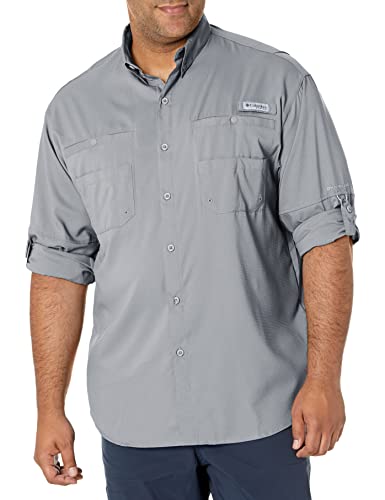
The Columbia Tamiami II long-sleeve listing provides a utility-shirt example. The current Tamiami II manufacturer page describes both a back vent and wicking features. That is a clear reason not to treat buttons and performance as opposites. The linked marketplace edition should still be checked separately from the current page.
The Huk Icon X long-sleeve crew listing supplies a contrasting pullover shape. Its title identifies a long-sleeve performance fishing shirt, but does not establish every fabric or treatment detail. Compare the uncluttered front and neckline with the utility layout you want. Do not import specifications from a revamped current Icon page merely because part of the name matches.
For a second button-front option, the Huk A1A Woven long-sleeve listing explicitly combines woven construction and performance wording in its title. It is an example of category overlap, not proof of a particular performance ranking. If that design interests you, inspect the exact A1A Woven option on Amazon and check its selected size and supplied details.
Compare movement with the same task
Try the same ordinary sequence in each candidate: arms forward, one elbow bent, a reach across the body and a seated position. With a button-front, watch for pulling at the placket and between fasteners. With a knit, watch for the neckline shifting or the hem rising. Both can fit well, and both can show a proportion that does not suit you.
If you like one garment in a particular posture, identify what creates that comfort. Perhaps it has more room across the back, a different sleeve opening or less material at the waist. Those observations are more useful than concluding “woven is restrictive” or “knit is clingy” from a single shirt. A different cut within the same broad construction may behave differently.
Keep the intended wearing arrangement consistent. Comparing a button-front over a tee with a knit worn alone mixes the effect of an extra layer into the comparison. Try both as you would actually use them, but acknowledge the outfit difference. If your preferred button-front arrangement includes a base layer, evaluate the complete combination rather than blaming the outer shirt for every sensation.
Airflow depends on what remains exposed
A back vent may be useful to inspect on a button-front, while mesh inserts or other panel choices may appear in knit shirts. Locate the feature before treating it as an advantage. A pack, seat or outer garment can cover the area where it is placed. A smooth front may matter more than a rear feature if most of your upper body sits beneath equipment.
Neither a vent nor a knit texture provides a comparative cooling result on its own. If a listing makes a performance claim without a shared test method, do not turn it into a score against another shirt. The hot-weather selection guide considers the fit and outfit questions that help make those descriptions useful without promising a temperature effect.
Read ratings without inferring them from construction
Neither woven nor knit automatically means a specific UPF. ARPANSA describes multiple factors affecting clothing protection, including fabric construction and tension. If a particular rating matters to you, look for it on the exact model. Do not use how opaque a shirt looks in a photograph as a numerical fabric assessment.
Coverage also changes with the way you arrange the garment. Unfastening the front, rolling sleeves or lowering a hood changes what fabric covers. That does not mean those adjustments are forbidden; it means they belong in an intentional clothing decision. Read the rating and examine the actual wearing position as separate checks.
Think about the rest of the day
A collared shirt may be the style you want for a trip that includes casual stops before or after fishing. A simple crew may fit more naturally with your other everyday clothes. Appearance can legitimately decide between two garments that both meet your functional requirements. You do not need to justify a preferred style by inventing a technical advantage over the alternative.
Care and packing should also fit the way you travel. Read the individual label rather than assuming all woven shirts need ironing or all knits can take the same drying treatment. Some people willingly give a favorite garment extra attention; others want the simplest compatible routine. Choose with that preference in mind before buying several copies of a new design.
Use one deciding feature to finish the choice
If adjustable openings and usable storage are central to your routine, a well-fitting button-front is the more direct starting point. If you want a smooth front and a familiar pullover shape, begin with a crew or hoodie. Then compare exact specifications within the preferred format. This avoids paying for a set of features that does not address the reason you were shopping.
For the pullover option discussed here, review the Icon X crew listing on Amazon with its version name intact. For utility layouts, browse the button-front collection. Other related decisions live in our buying guides. A button-front can be a performance shirt, and the best distinction is the design you will use.
Frequently asked questions
Can a button-front fishing shirt wick moisture?
Yes, some specific models list wicking features. The current Tamiami II manufacturer example does, but verify the actual product rather than assuming every button-front has the same treatment.
Are knit fishing shirts always stretchier than woven shirts?
Do not assume a universal ranking. Check the exact construction and fit, then evaluate the movements you need. Fabric labels alone do not show how the complete garment will fit your shoulders and arms.
Which style works better under a vest or pack?
A simple pullover can reduce front closures, but either shape needs an outfit check. Look for pockets, buttons, seams or folds beneath straps and panels, and choose the garment that sits comfortably there.
Final Verdict
Frame this decision as utility button-front versus pullover construction, not ordinary clothing versus performance. The Tamiami II and A1A Woven examples show why performance features can appear in collared shirts, while the Icon X crew offers a simpler front. Choose according to storage access, preferred neckline and the way the garment sits under your equipment. Verify the actual rating, fit and version after selecting the shape. When both styles meet your practical needs, your preferred appearance and care routine can decide without requiring a claim that either construction is universally better for fishing.
Explore the matching collections
Take the next step
Compare your shortlist or explore more buying & comparisons.
Revisit the first shirt on Amazon ↗Related field notes
How to Deal with Snags in Fishing Shirts
Assess fishing-shirt snags before cutting or sewing: distinguish pulled loops, woven puckers, seam damage, and holes, then choose a careful repair path.
Read the field note →Should You Use Fabric Softener on Fishing Shirts?
Learn when to skip fabric softener on fishing shirts, how to interpret care instructions, and what to check after an accidental softener wash at home.
Read the field note →Fishing Shirts vs Hiking Shirts: Choose for the Whole Day
Compare fishing and hiking shirts by pack comfort, pocket access, coverage and movement, with a practical way to choose one shirt for both activities.
Read the field note →How to Get Wrinkles Out of Fishing Shirts
Get wrinkles out of fishing shirts with label-safe drying, careful pressing, and travel packing tips for woven shirts, performance knits, and logos.
Read the field note →