Long Sleeve vs Short Sleeve Fishing Shirts: Decide by Use and Coverage
Compare long and short sleeve fishing shirts by arm coverage, cuffs, movement and layering, including when roll-up sleeves are a useful compromise.
Quick Answer
Long sleeves offer more arm coverage and keep that fabric attached to the shirt; short sleeves leave the forearms uncovered and remove cuffs from the equation. Decide which arrangement you want before comparing fabric claims. Then check reach, elbow movement and any layers worn over the shirt. Roll-up sleeves offer another wearing position, but rolled sleeves do not maintain the same coverage as sleeves worn down.
As an Amazon Associate I earn from qualifying purchases. These links take you to Amazon, where purchases take place.
Three relevant shirts to compare
Examples for this guide. Check the exact garment and variation on Amazon.


Men's Short Sleeve Sun Shirt
Short sleeve · Listed UPF 50+
Details & considerationsView on Amazon ↗In this field note
- Ask what you want covering your arms
- Long sleeves deserve a reach check
- Short sleeves shift the fit question upward
- Compare matching models where you can
- Rolled sleeves are a different wearing position
- Consider your other sleeves
- Heat does not create a single answer
- Think about handling, not just wearing
- A simple short-sleeve alternative
- Choose the arrangement you will maintain
Sleeve length is one of the few shirt decisions you can see immediately. Its consequences are less obvious. A cuff can be convenient to adjust or irritating around a watch. A short sleeve can feel uncomplicated until you decide you want another layer over your forearms. A long sleeve that fits well at rest can pull upward when you reach for a rod.
Choose the arrangement you want to wear through an ordinary outing, then examine the shirt that provides it. This guide compares arm coverage, movement and layering rather than ranking every product in each category. The fishing shirt buying hub connects sleeve choice to the other design decisions that follow.
Ask what you want covering your arms
Begin with a plain description: do you want fabric from shoulder to wrist for most of the trip, or do you prefer leaving the forearms uncovered? Long sleeves make the first arrangement part of one garment. Short sleeves make the second straightforward. If you change your preference during an outing, consider whether you want to roll sleeves, add a separate piece or change shirts.
A fabric rating should remain a separate item on the checklist. The Skin Cancer Foundation explains UPF as a fabric measure, while the garment determines what skin is covered. A short-sleeve shirt with a stated rating does not extend that fabric over the uncovered portion of your arms. This is a coverage difference even when two shirts share the same number.
There is no need to turn your preference into a universal rule. You may choose long sleeves for one outing and short sleeves for another because the overall clothing arrangement changes. The important part is to make that choice deliberately, rather than assuming that a fishing label or a particular fabric rating settles all questions about the outfit.
Long sleeves deserve a reach check
Put both arms forward as though holding and operating a reel. Notice whether the cuff position changes in a way you find uncomfortable. Then bend one elbow fully and reach across your body. Sleeves need to accommodate these movements without making the shoulders or upper back feel restricted. A shirt can have adequate body width and still have a sleeve proportion that does not suit you.
Check the wrists with any watch or other ordinary item you wear there. A cuff may slide over it comfortably, catch against it or create more bulk than you want. Compare the cuff fastened in the position you intend to use. If the only comfortable arrangement leaves it repeatedly moving into your hand, another cut may serve you better.
Also consider what the sleeve does when you lower your arms. Extra length can gather at the wrist even when the reach feels good. Some people accept that for comfortable extension; others prefer a different sleeve shape. The goal is a workable compromise across positions, not a single ideal photograph. Avoid changing body size solely to fix a cuff issue without checking the rest of the fit.
Short sleeves shift the fit question upward
Without a cuff, the sleeve opening and upper-arm fit become more prominent. Reach forward and lift an elbow to check whether the opening binds or the sleeve rides into the armpit. A short sleeve can be loose around the arm while the shoulder still restricts movement. Examine those areas independently rather than assuming fewer inches of fabric guarantee easier casting.
Look at the point where the sleeve ends relative to your usual clothing and equipment. If a layer sits over it, check whether the sleeve bunches beneath that layer. If you prefer the shirt by itself, decide whether you like the opening's position and shape. Comfort at the edge of a short sleeve can matter as much as wrist comfort does in a long one.
| Decision | Long sleeve | Short sleeve |
|---|---|---|
| Arm coverage | More coverage when worn down | Forearms remain uncovered |
| Fit checks | Reach, elbow room, cuff and wrist | Shoulder movement and sleeve opening |
| Layering | Check sleeve overlap beneath outer layers | Check upper-arm bunching and exposed-arm preference |
| Adjustment | Some designs offer roll-up tabs | Extra coverage requires another arrangement |
Compare matching models where you can
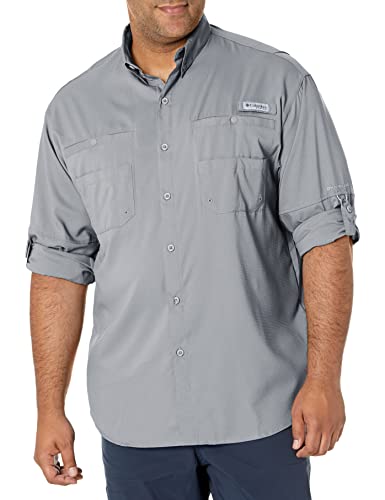
The Tamiami II long-sleeve listing and Tamiami II short-sleeve listing are useful starting examples because they share a family name. However, do not assume every material, rating and fit detail matches across them. One referenced marketplace title includes edition wording that the other does not. Verify the actual versions before drawing a technical comparison.
Columbia's current Tamiami II long-sleeve manufacturer example lists roll-up sleeve tabs. That tells you to inspect the rolled position as well as the cuff-down position. It does not prove that an older marketplace shirt is identical or that a similarly named short-sleeve option has the same specification in every other respect.
For a long-sleeve candidate, review the selected Tamiami II long-sleeve option on Amazon. Note the exact sleeve format and edition, then compare it with the shorter alternative. Keeping the broad design consistent helps you focus on sleeve handling rather than confusing it with the difference between a button-front and a crew.
Rolled sleeves are a different wearing position
A rolled sleeve creates a fold of fabric near the arm. Whether that feels useful depends on its position, thickness and how it behaves when you bend the elbow. Try the roll arrangement provided by the design instead of assuming it will sit where you prefer. If a tab is included, check how easily it holds the sleeve and whether the closure bothers you during movement.
This can be a helpful option when you genuinely expect to alternate between sleeves down and sleeves rolled. It is less compelling when you plan to keep the fabric rolled throughout nearly every trip. In that case, a short-sleeve design may remove an unnecessary fold. Conversely, someone who wants sleeves down most of the time may value an occasional adjustment without buying another shirt.
Once rolled, the sleeve no longer covers the same area of your arm. That seems obvious, but it is easy to overlook when comparing UPF labels. The garment's stated fabric rating does not change the position of the fold or fill the space below it. Make the rolled arrangement part of your coverage decision instead of treating it as a comfort setting without tradeoffs.
Consider your other sleeves
If you frequently add a jacket, check the shirt and jacket together. A long sleeve can bunch or twist beneath the outer sleeve, especially if you put the layer on quickly. A short sleeve removes some of that overlap but creates a different feel against the outer garment. Your preference may depend on the particular jacket rather than sleeve length in isolation.
Try taking the outer layer off as well as putting it on. Notice whether the shirt sleeve follows it, whether cuffs catch and whether you need to rearrange the garment afterward. These ordinary transitions matter on a day when conditions or activities change. They are also a reason to compare the outfit you own before buying a shirt for a hypothetical ideal setup.
Heat does not create a single answer
You may enjoy the feel of short sleeves in warm conditions, or you may prefer the coverage of long sleeves in a comfortable lightweight design. Neither preference establishes that all shirts of one length feel cooler. Fit, construction and the other clothing you wear still matter. Avoid assigning a cooling result from sleeve length alone or treating a promotional adjective as a measured comparison.
The hot-weather fishing shirt guide considers ventilation, damp-fabric comfort and equipment overlap. Use it after deciding the coverage arrangement you want. That order prevents a vague cooling promise from distracting you from the basic question of what you intend to wear over your arms.
Think about handling, not just wearing
Long sleeves add cuffs and, in some designs, tabs that need attention when washing and storing the shirt. Short sleeves simplify that part of the garment but do not necessarily simplify every care requirement. Use the actual care label for the selected shirt. Columbia's general guidance includes closing fasteners to reduce snagging, a relevant habit when a design includes buttons or tabs.
When packing for several outings, decide whether variety or repetition is more useful. One long-sleeve and one short-sleeve shirt can support different wearing preferences. Two copies of a shape you already know may better suit a simple rotation. Neither wardrobe is automatically better. Base the purchase on how often you expect to change sleeve arrangements, rather than buying a duplicate merely because it belongs to the same family.
A simple short-sleeve alternative
The Baleaf men's short-sleeve sun shirt is a crew-style option whose title states UPF 50+. It is useful if you prefer a simpler front and do not need rolled sleeves or cuffs. Keep that format change visible in the comparison: it differs from the Tamiami button-front in more than sleeve length.
Inspect the exact Baleaf short-sleeve listing on Amazon if that uncomplicated shape suits you. Check the selected size and sleeve opening rather than assuming the rash-guard wording in the title implies a particular closeness of fit. Listing terms can overlap; the actual cut is what you will wear.
Choose the arrangement you will maintain
For a person who wants fabric over the arms for most of the trip, a well-fitting long sleeve is the direct solution. For someone who prefers uncovered forearms, a suitable short sleeve is simpler than permanently rolled fabric. If your preference changes, inspect a roll-up design or plan an intentional second layer. The best compromise is the one you can explain in terms of your own day.
Browse the long-sleeve collection or short-sleeve collection only after making that first decision. Then use movement and exact model information to narrow the options. A sleeve that works at rest, during a cast and under your usual layers is more useful than one selected solely from a temperature rule.
Frequently asked questions
Are rolled-up long sleeves equivalent to a short-sleeve shirt?
They can expose a similar part of the arm, but the rolled fabric and tabs create a different fit around the elbow. Check that arrangement during movement rather than assuming it feels the same.
Should I size up to get longer sleeves?
Not automatically. A larger body size may create unwanted bulk without solving the sleeve proportions. Check the relevant measurements and consider another cut if the wrists and body need different changes.
Does a UPF-rated short sleeve protect my forearms?
Its rated fabric covers only the areas reached by the garment. A short-sleeve shirt leaves the forearms uncovered; the fabric number does not extend into that area.
Final Verdict
Choose sleeve length by the coverage and wearing arrangement you actually want. Long sleeves need comfortable reach, elbow room and workable cuffs; short sleeves need a comfortable shoulder and sleeve opening. Tamiami II long- and short-sleeve listings provide family-based options to investigate, while the Baleaf short-sleeve crew offers a simpler front. Keep exact version details separate, and judge rolled sleeves as their own wearing position. Once the format is right, fit and layer compatibility can settle the model choice without relying on a universal claim that one sleeve length is best for every fishing day.
Explore the matching collections
Take the next step
Compare your shortlist or explore more buying & comparisons.
Revisit the first shirt on Amazon ↗Related field notes
Columbia Tamiami II vs Bonehead: Polyester Utility or Cotton?
Compare Columbia Tamiami II long sleeve and Bonehead short sleeve by verified fabric, fit, pockets, care, and the sleeve difference that shapes the choice.
Read the field note →Cotton vs Polyester Fishing Shirts: Drying, Feel, and Use
Compare cotton and polyester fishing shirts for damp outings, everyday comfort, fabric feel, and care, with model-specific examples and tradeoffs.
Read the field note →Columbia Bahama II vs Tamiami II: Which Button-Front Fits Your Routine?
Compare Columbia Bahama II and Tamiami II fishing shirts by current fabric details, fit, storage and sleeve choice while keeping marketplace versions distinct.
Read the field note →Fishing Shirts vs Hiking Shirts: Choose for the Whole Day
Compare fishing and hiking shirts by pack comfort, pocket access, coverage and movement, with a practical way to choose one shirt for both activities.
Read the field note →