Tournament Fishing Jerseys: Features and Customization
Plan a custom tournament fishing jersey with a clear artwork brief, sample checks, roster control, and realistic questions for your chosen decorator.
Quick Answer
A tournament jersey order starts with the garment, roster, and approved artwork, not the largest logo. Choose a shirt format that works for your team, ask the decorator which printing method suits the exact fabric, and approve a physical sample when practical. Confirm names, sizes, placements, deadlines, and reorder terms in writing. The Amazon shirts shown here are ready-made format references; their listings do not establish custom printing or team fulfillment.
As an Amazon Associate I earn from qualifying purchases. These links take you to Amazon, where purchases take place.
Three relevant shirts to compare
Examples for this guide. Check the exact garment and variation on Amazon.


In this field note
Write the order brief before choosing artwork
A custom fishing jersey has two jobs: work as clothing and communicate a team identity clearly. Those jobs can conflict when a large graphic crosses a vent, a name disappears beneath a hood, or the chosen shirt fits one angler well and another poorly. Treat the order as a small production project. Establish who needs a garment, how it will be worn, and what information must be visible before discussing color effects. That sequence lets the decorator recommend a feasible approach to a specific need rather than interpreting a collection of unrelated preferences.
Your initial brief should name the event or team, intended garment format, expected quantity, and the date you need finished shirts in hand. Distinguish the delivery date from the tournament date so there is room to inspect the order. Describe whether the jersey is primarily fishing clothing, a team photograph garment, or both. A shirt intended for repeated wear deserves attention to movement and laundering alongside appearance. Do not assume that an item called a tournament jersey carries any event approval; check the organizer's current requirements directly if clothing or sponsor placement is regulated.
Establish one owner for decisions
Choose one person to gather roster information and one final approval route. This is an organizational suggestion, not a requirement to hire a coordinator. Problems arise when a decorator receives conflicting names, sizes, and logo revisions from several team members. Keep a dated master version that records the approved changes. Ask the supplier how late edits affect the schedule and whether each revision replaces the previous proof. A brief written confirmation of the final file and roster is more reliable than expecting someone to reconstruct approval from a long message thread.
The roster should separate the wearer's everyday name from the exact text to be printed. Some anglers want a surname, some a first and last name, and some no personal text at all. Preserve capitalization, punctuation, and accents deliberately. Put garment size, cut, sleeve format, and quantity in separate fields rather than cramming them into notes. This makes it easier to spot an incomplete row. Check each personalized entry with its wearer before sending it for production; an accurate printer can still produce a wrong name if the approved roster was wrong.
Select the blank around movement and layout
A long-sleeve crew offers broad front and rear areas, while a hood changes which part of the upper back remains visible. A button-front divides the front with a placket and may add pockets, a vent, or other construction details. These are layout constraints as much as style choices. Examine the actual garment flat and on a person. The back of a shirt can look like a large uninterrupted canvas on a mockup even when the worn hood covers the team name or the fabric folds under a vest.
The HUK Icon X long-sleeve crew is a ready-made example of the crew format, and the AFTCO Jason Christie Performance Hoodie illustrates a hooded fishing-shirt format. Neither listing is evidence that a third party will print on it or that it can be ordered as a customizable blank. Before buying retail shirts for decoration, ask the decorator whether customer-supplied garments are accepted and what happens if a garment is damaged during setup. Clarify that policy before committing the team's clothing budget.
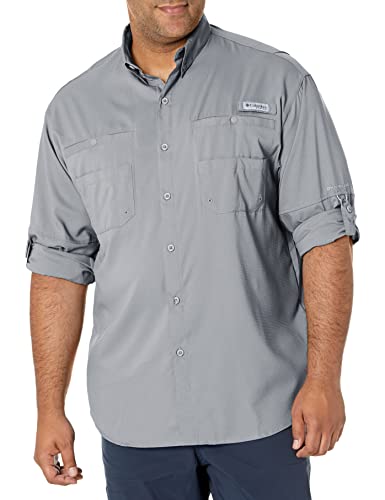
A fishing shirt's extra details can interfere with both decoration and wear. Columbia's current Tamiami II long-sleeve description lists multiple chest pockets, a rod-holder loop, and a mesh-lined back vent. Those features make it a useful illustration of why placement must follow construction. A rectangular chest logo that works on a crew may overlap a pocket flap on a woven shirt. A continuous back design may need to accommodate the vent. Ask for placement on photographs or a sample of the actual blank rather than on a generic shirt silhouette.
Ask the decorator about method, without guessing compatibility
Common decoration discussions include sublimation, transfers, screen printing, and embroidery. Do not select a method solely from a claim that it is best for fishing. Ask which process the decorator supports on the exact garment you are considering, what limitations it creates, and whether the supplier can provide a representative sample. Fabric, color, existing finishes, seams, and the size of the design may affect the proposal. A retailer's performance terminology is not a printing instruction. The useful answer is a documented recommendation for that blank and artwork, with care instructions for the completed garment.
Here are practical questions to put in the quote request: Will the finished artwork have a noticeable surface feel? Are there limits on small lettering, gradients, or placements? Does the proposed process require changing the garment color? How are the neck label and care instructions handled? Is the quote for decorating a finished stock shirt or producing a fully designed jersey? The answers distinguish very different services that can all be described casually as custom shirts. Avoid comparing totals until you know the suppliers are quoting the same finished product and responsibilities.
If you are evaluating a woven team-shirt option, use the exact Tamiami II Amazon listing only as a garment reference. Its selected title includes a discontinued designation and provides no custom-order service. Ask your decorator to identify the exact blank they can source or accept. They may propose something different for practical reasons. Compare that proposal on fit, construction, and proof quality rather than insisting on a familiar model name. You are commissioning a finished item, so the combination of blank and decoration matters more than either component in isolation.
A printed UPF number needs support
Do not place a numerical UPF claim on a jersey because a similar retail shirt carries one. Ask what evidence supports the claim for the exact finished garment and whether the decoration process affects any supplier-stated performance claims. The ARPANSA labeling guidance explains that fabric testing and garment coverage are distinct considerations. That source describes its own testing context, not an approval for your custom order. If the supplier cannot substantiate a proposed label, keep it out of the artwork instead of borrowing language from a different product.
Approve a proof that can actually be checked
A useful proof identifies the garment model and color, front and back artwork, each sleeve, personalized text, and the intended placements. Ask whether the displayed scale is representative and how the supplier defines placement measurements. Do not invent your own tolerance after production; discuss any critical position in advance. For example, a sponsor name that must remain readable beneath a hood deserves specific attention. Have the team review the proof for the information it contains, not just whether the colors look attractive on a screen.
If sponsor or event logos are involved, obtain the approved artwork and any placement guidance from the relevant organization. Confirm that your team has permission to use the supplied designs rather than recreating a logo from a small online image. This is a practical coordination step, not legal advice. Keep the original files separate from draft versions so the decorator can identify the intended source. If a logo must remain unchanged, say so clearly. Otherwise a well-meant adjustment to spacing or color can produce an avoidable approval cycle late in the schedule.
Use the sample to answer specific questions
A physical sample is most valuable when it resolves uncertainty: the feel of a large printed area, the legibility of a small name, the interaction of a hood with the back design, or the fit of a selected cut. Wear it in the position relevant to the event. Reach forward, sit, and put on any ordinary outer layer you expect to use. Photograph the front and back from a normal viewing distance. A sample does not establish laboratory performance, but it can expose a layout problem that a flat digital proof concealed.
For sizing, ask whether the chart gives body measurements or finished garment dimensions, and make that distinction clear to everyone on the roster. One sample size cannot prove how every size will fit. If practical, collect measurements from well-fitting garments using the supplier's method, or arrange a fitting set. The fishing-shirt sizing guide explains the underlying movement checks. Avoid automatically assigning each person their usual casual T-shirt size when the chosen jersey has a different cut. Personalized garments make correct size selection especially consequential.
Close the order with a usable record
Before payment or production approval, reconcile quantity against the roster, confirm what the quoted total includes, and record shipping arrangements and the required delivery date. Ask about minimums for later reorders, whether artwork is retained, and whether a replacement can match the original garment if the blank changes. These are questions for your supplier, not services FishingShirts.org or Amazon promises to provide. Keep one approved packet containing the quote, final proof, roster, and care information. It becomes a useful reference if a team member needs another jersey later.
For ready-made alternatives while you evaluate customization, the Icon X crew on Amazon shows one simple format, and the graphic shirt collection shows predesigned options. Buying an existing graphic can be appropriate when the real need is a coordinated look and personalized text is optional. Review the fishing-shirt feature guides when deciding which garment details belong in your brief. Your final approval should describe a shirt the team can comfortably wear, with artwork everyone has checked and production terms everyone understands.
Frequently asked questions
Can I order custom names on the Amazon shirts linked here?
These links identify ready-made garments, not verified custom fulfillment. Ask a chosen decorator or supplier about personalization and confirm whether they accept customer-supplied shirts before purchasing blanks.
Should our team approve a digital proof or a physical sample?
Use a digital proof to verify content and layout. A physical sample is useful when fit, print feel, color, or placement around a hood or pocket remains uncertain. Ask how sampling affects the production schedule.
Can we use the same size list as last season?
Only after checking that the garment model, cut, chart basis, and wearers’ preferences still match. A retained roster is a useful starting point, but each person should confirm their current selection before personalized production.
Final Verdict
A good tournament jersey order is specific enough to manufacture and clear enough to review. Set the garment format and roster first, then build artwork around seams, pockets, hoods, and the information that needs to remain visible. Let the decorator explain process compatibility for the exact blank, and use a sample to resolve meaningful uncertainty. Approve names, sizes, placements, delivery expectations, and reorder terms together in one record. Ready-made retail shirts can help you compare formats, but customization requires a separate, verified supplier arrangement. The result should serve the team as wearable clothing as well as a recognizable design.
Explore the matching collections
Take the next step
Compare your shortlist or explore more features & design.
Revisit the first shirt on Amazon ↗Related field notes
Button-Up vs Performance Fishing Shirts: Woven or Knit?
Compare button-front and knit fishing shirts by closures, pockets, movement and layering, while understanding why both can carry performance features.
Read the field note →How to Get Wrinkles Out of Fishing Shirts
Get wrinkles out of fishing shirts with label-safe drying, careful pressing, and travel packing tips for woven shirts, performance knits, and logos.
Read the field note →Should You Use Fabric Softener on Fishing Shirts?
Learn when to skip fabric softener on fishing shirts, how to interpret care instructions, and what to check after an accidental softener wash at home.
Read the field note →How to Deal with Snags in Fishing Shirts
Assess fishing-shirt snags before cutting or sewing: distinguish pulled loops, woven puckers, seam damage, and holes, then choose a careful repair path.
Read the field note →